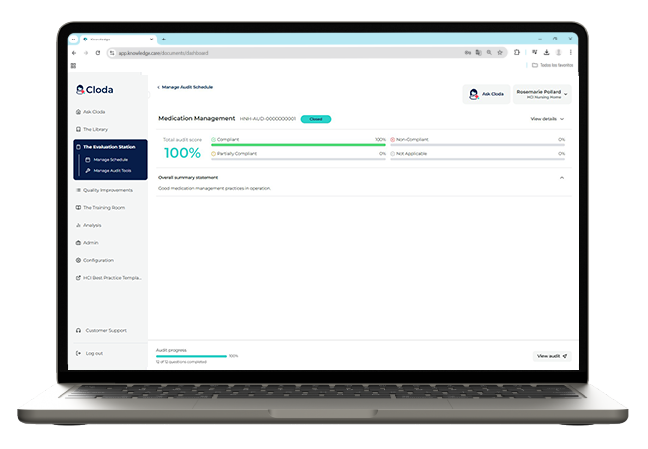
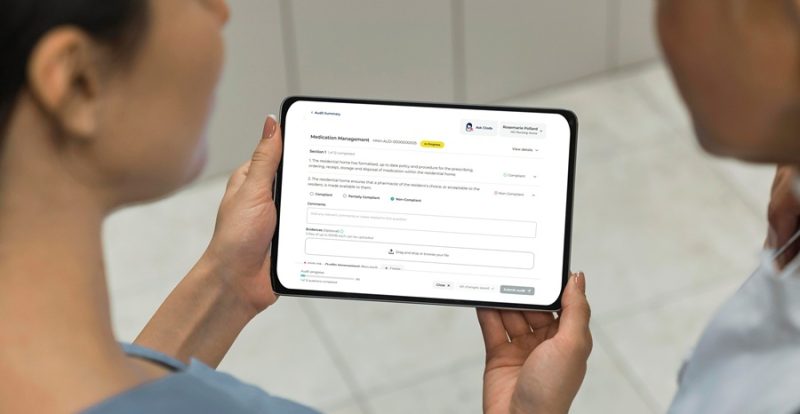
The Evaluation Station is an Audit Management System for healthcare providers, managing the full internal audit lifecycle from scheduling to resolution. With Cloda Voice Audits, auditors can capture findings by voice as they complete an audit, with Cloda helping to document evidence, suggest ratings and identify potential QIPs.
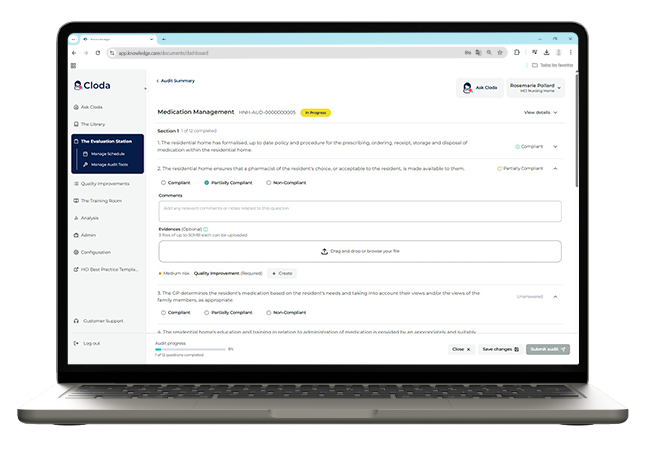
Cloda can make completing audits >50% faster and easier using voice. Simply narrate your findings and Cloda helps structure the audit by mapping your comments to the relevant question, suggesting a compliance rating for you to review, and drafting QIPs and actions based on the issues identified. The result? Less typing, faster completion and quicker action on issues affecting care.
The Evaluation Station is an audit management software that helps healthcare providers move from audit findings to measurable improvement. Manage every stage of the internal audit lifecycle in one place, schedule audits, record findings, assign actions, track progress and evidence completion.
Confidence that no audit or quality improvement is marked resolved until it's genuinely closed out.
Quality Managers
Inspection-ready audit reporting at a click, without a last-minute scramble.
Audit Manager
Full oversight of every internal audit's status, without chasing updates manually.
Auditor
Less time on admin, more time on meaningful reviews — everything captured in one flow.
Quality Improvement Owner
Always knows exactly what's expected and by when. No ambiguity, no chasing.
Auditee
Clarity on which audits and teams they're linked to, from the moment it's scheduled.
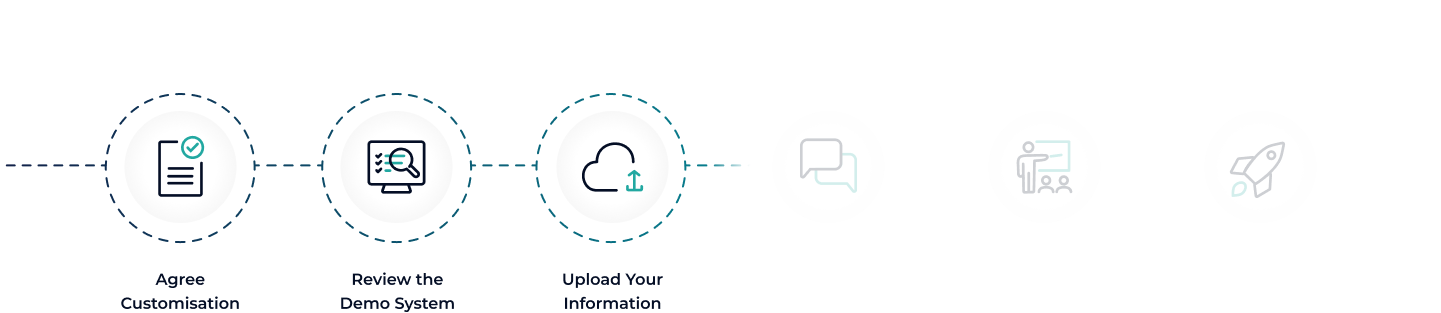
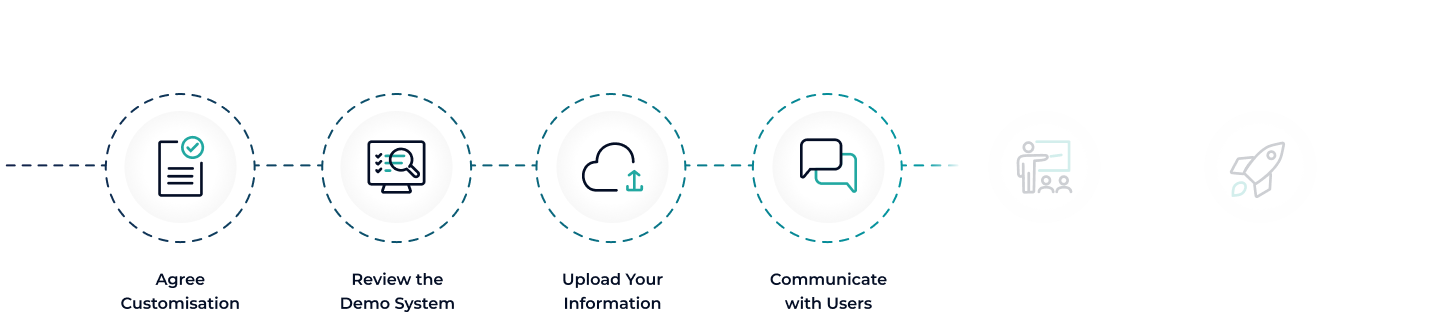
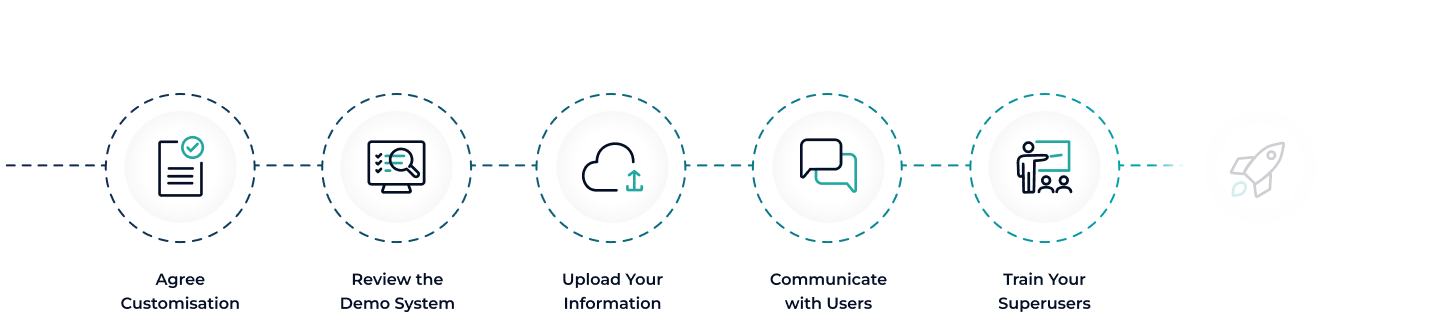
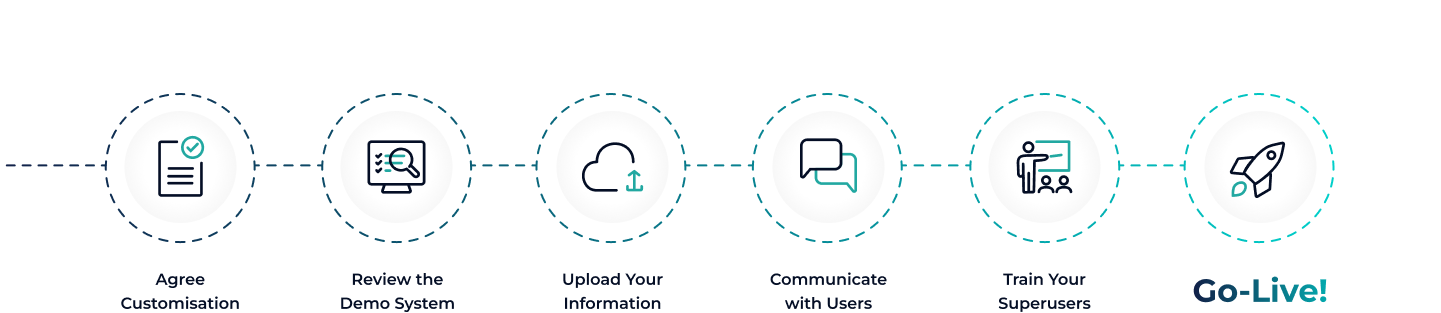
Implementation
A streamlined setup with long-term impact.
The Evaluation Station FAQs
What is audit management software?
Audit management software is a system that manages the full internal audit lifecycle in one place — scheduling audits, capturing findings, and tracking any resulting corrective actions through to resolution — replacing manual, spreadsheet-based processes.
What's the difference between internal audit software and quality improvement software?
Internal audit software focuses on planning and completing audits. Quality improvement software tracks the corrective actions those audits raise. Cloda’s Evaluation Station combines both: every audit finding automatically generates a tracked quality improvement, so nothing is logged without being followed through.
Is this suitable as healthcare compliance auditing software?
Yes. The Evaluation Station is built specifically for internal audit in healthcare and social care settings, structured around the audit categories, evidence requirements, and follow-up accountability that the regulator expects.
What is the Evaluation Station?
It’s Cloda’s module for managing the full lifecycle of an audit — from scheduling, through completion, to the resolution of any findings it raises.
What are Cloda Voice Audits?
Cloda Voice Audits allow auditors to capture findings by voice as they complete an audit. Cloda helps document the evidence, suggest a rating and identify potential Quality Improvement Plans (QIPs), reducing the time spent on manual note-taking and write-up.
How is an audit assigned to someone?
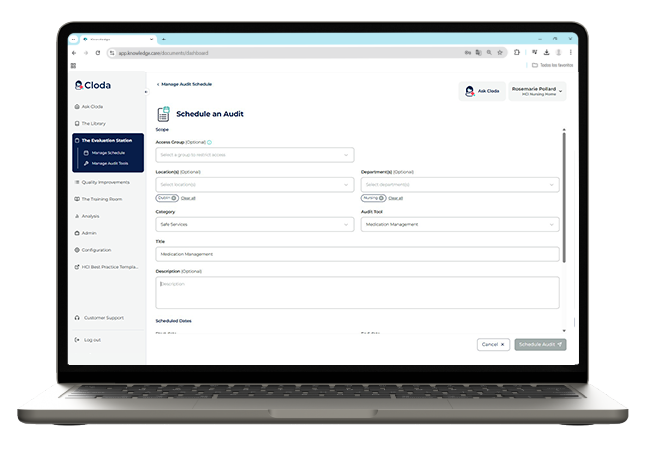
The Audit Manager schedules the audit, selecting the location, audit category, audit tool, auditor, and owner. The person assigned then receives an email with a direct link into the Evaluation Station to begin.
What happens if I find a non-compliance during an audit?
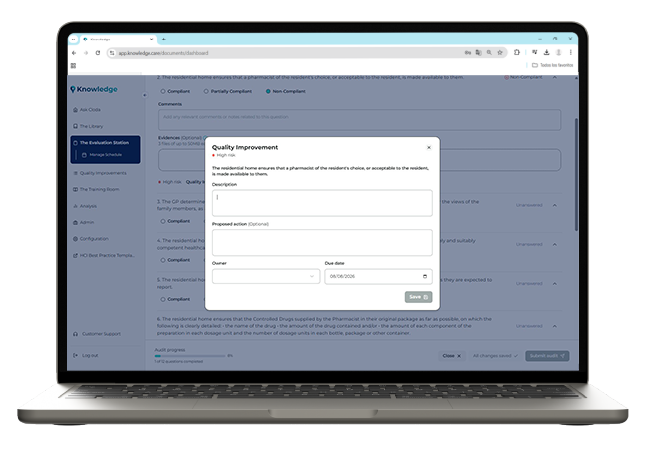
You mark the relevant question as partially compliant or non-compliant, and Cloda prompts you to raise a Quality Improvement immediately — capturing the description, proposed action, and the person responsible.
Who has to act on a Quality Improvement?
Whoever is set as the owner. They receive a notification, see the finding, the risk rating, and the due date, and log their response directly in Cloda before marking it closed.
Can the person actioning a Quality Improvement edit the original finding?
Whoever is set as the owner. They receive a notification, see the finding, the risk rating, and the due date, and log their response directly in Cloda before marking it closed.
Can we track outstanding Quality Improvements across the whole organisation?
No. The description and proposed action are set by the auditor and can’t be altered by the owner — they can only add their action response. This keeps the audit trail accurate.
When does an audit actually close?
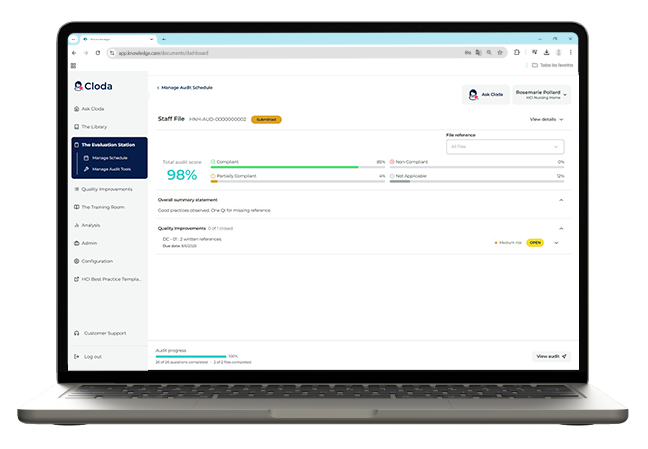
Only once every Quality Improvement linked to it has been closed. If one improvement is still open, the audit stays open — so status always reflects what’s genuinely resolved.
Does this work for regulatory inspection readiness?
Yes. Because every finding is time-stamped, owned, and tracked to closure, the Evaluation Station gives providers a clear, evidence-backed audit trail — exactly what inspectors look for when assessing how effectively a service identifies and acts on its own gaps.
Results You Can Measure
Our clients experience incredible value when they choose The Library as their Policy and Procedure Management System. Read our client stories to see the transformational value created by The Library and Cloda.