




Introduction
In many care services, the issue is not that policies and procedures are missing. It is that they are not consistently understood, followed or embedded in day-to-day practice.
Our recent review of CQC inspection reports for disability care homes, including services supporting people with learning disabilities, autism and physical disabilities, show this clearly. Across services rated Requires Improvement or Inadequate, inspectors repeatedly found that providers had procedures, values or formal processes in place, but frontline care did not always reflect them reliably.
When procedures are not followed consistently, the consequences can be serious. In the reports reviewed, the gap between written process and actual practice contributed to concerns in safeguarding, risk management, medicines administration, consent, staffing, dignity and governance.
Before we dive in, we would love to hear your thoughts below!
Poll: Do you have a digital solution in place to manage your policies and procedures?
Cast your vote and see what your peers said!
Policies and procedures were present, but not consistently followed
The clearest example comes from one care home, where CQC stated plainly that policies and procedures were in place, but they were not consistently followed. The report linked this to key areas including safeguarding, care planning, risk management, medicines administration, application of the Mental Capacity Act 2005 and recruitment. CQC said this contributed to breaches relating to safe care and treatment, safeguarding, consent, staffing, person-centred care, dignity and good governance.
That finding captures a wider pattern across the reports: the existence of a written process did not guarantee consistent practice. In a number of other homes, CQC noted:
- The provider had core values, previous action plans and oversight structures in place, but inspectors found those values were not consistently reflected in daily care. The service continued to show serious concerns despite earlier regulatory action and assurances of improvement.
- The provider had organisational core values, but some staff did not know or understand them, and leaders did not consistently model or uphold them in practice. CQC concluded that the provider could not demonstrate a shared culture that supported high-quality, person-centred care.
- The service was not consistently working in line with CQC’s Right Care, Right Support, Right Culture guidance, despite formal systems being in place.
The problem was often not policy design, but policy embedding
The reports suggest that many providers were not failing because they had no procedures. They were failing because those procedures were not embedded strongly enough into everyday care delivery.
That gap appeared in several ways.
1) Staff did not always follow the expected process in key risk areas
In some services, expected processes around safeguarding, incident escalation, medicines, staffing or consent were not being followed reliably.
- CQC found that staff had not consistently followed expected escalation processes in safeguarding incidents and governance matters, including medication errors and repeated unexplained injuries.
- Leaders had failed to identify unsafe restrictive practices and unreported incidents, and staff did not have the guidance or expectations needed to work safely and consistently.
- Staff told inspectors they had raised safeguarding concerns to managers, but these had not been documented or escalated by the previous registered manager.
These examples point to a common issue: the procedure may exist, but the service still cannot rely on it being followed in practice.
2) Staff understanding of procedures was inconsistent
A written procedure is only useful if staff understand what it requires and how to apply it in real situations.
Several reports show that understanding was variable.
- CQC found the provider did not have robust systems to ensure staff were fully trained in mandatory subjects, and competency documentation was incomplete in some areas.
- Staff had not received learning disability and autism training at the level required for their roles, contributing to inconsistent practice.
- Staff had not received communication training that reflected people’s specific needs, limiting their ability to support people consistently or meaningfully.
- Some agency staff were unable to describe what constituted abuse or who concerns should be escalated to, despite the provider having policies in place.
This is one of the most important operational lessons from the review: compliance depends not only on whether a procedure exists, but on whether the workforce understands it well enough to use it correctly.
3) Leaders did not always make sure procedures were lived in practice
The gap between policy and practice was also a leadership issue. In several reports, providers had formal processes and policies, but leaders had not ensured they were embedded consistently at service level.
- Locality leaders had documented concerns and issued actions, but these were not always enacted or followed up by senior leadership.
- Leaders did not consistently model or uphold the provider’s values, and the service was not consistently aligned to them in practice.
- The provider and registered manager did not demonstrate sufficient oversight to ensure policies in safeguarding, medicines, risk management, recruitment and consent were consistently applied.
- Leaders did not act on reliable information about risk, performance or outcomes, even though some audits had recently reported no concerns.
This shows that embedding procedure is not only a frontline issue. It depends on whether leaders reinforce expectations, identify drift early, and respond quickly when practice slips.
False assurance is one of the biggest risks
One of the clearest themes across the reports is the danger of false assurance.
A provider may believe it is compliant because:
- policies are written
- training has been delivered
- audits have been completed
- action plans exist
But CQC repeatedly found that those signals did not always reflect the lived reality of care.
- Audits completed shortly before inspection reported no concerns, yet CQC identified multiple serious shortfalls and breaches.
- Audits, meetings and checks were present, but they did not reliably identify or address repeated shortfalls.
- Internal quality assurance had identified many of the same shortfalls inspectors later found, but the required changes had not been made in time.
This is a useful warning for providers: the risk is not only missing a procedure. The risk is believing the procedure is embedded when it is not.
Why this matters especially in disability care homes
This issue is especially significant in services supporting people with learning disabilities, autism and physical disabilities, because staff often need to apply procedures in real time, in complex and fast-moving situations.
That includes situations involving:
- safeguarding concerns
- medicines administration
- supporting distress or dysregulation
- communication needs
- consent and MCA
- restrictive practice
- escalation of health concerns
If staff cannot quickly access the relevant procedure, do not fully understand it, or are unclear how it applies in a live care situation, variation becomes much more likely.
That variation can then show up in exactly the areas these reports highlight most often: delayed escalation, inconsistent support, dignity failures, unlawful restrictions, medicines errors and weak safeguarding responses.
Introducing Cloda: A Smart Digital Assistant for Disability Care Home Compliance
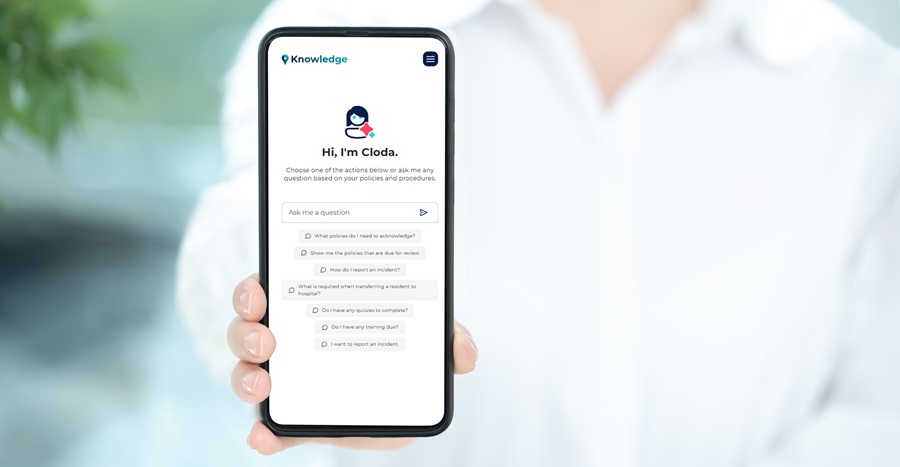
Cloda is the digital assistant available in staffs’ pocket to provide the answers they need to your policies and procedures — in their own language. In doing so, Cloda helps staff to deliver safer care, aligned with your best practice policies and procedures, and CQC’s expectations.
That matters because many of the failures described in these reports suggest a practical frontline problem:
- staff do not always know the right procedure
- they cannot always access it quickly enough
- they may not fully understand what it requires
- practice becomes inconsistent as a result
Cloda helps reduce that risk by making policies and procedures:
- easier to access when staff need them
- easier to understand in real care settings
- more usable for diverse teams
- more likely to be reinforced through comprehension support and quizzes.
In other words, Cloda helps close the gap between having a procedure and being able to follow it confidently in practice.
Conclusion
The strongest lesson from these reports is that compliance is not created by documentation alone. A service may have policies and procedures in place and still fall short if those procedures are not consistently understood, followed and reinforced in day-to-day care.
For providers, the real challenge is not just writing procedures. It is making sure they are usable, understood and applied at the point of care — especially in the moments where safety, dignity, rights and person-centred support depend on staff getting the right response right first time.
If you want to explore how Cloda can help support your compliance journey and make policies easier to access, understand and embed within your service, contact info@cloda.ai for more information or a demo.

Key takeaway learnings for disability care home providers:
- The problem is often not missing policy, but inconsistent follow-through.
Recent CQC reports show that providers may have policies and procedures in place, but frontline practice does not always reflect them consistently. - Written procedures do not protect people unless staff can apply them in real situations.
Compliance depends on whether staff can quickly access the right procedure, understand it, and use it confidently at the point of care. - Variation in practice is a major risk indicator.
When the same procedure is applied differently across shifts, teams or situations, the risk of poor care, missed escalation and avoidable harm increases. - Leadership has a key role in embedding procedures, not just approving them.
Providers need leaders who reinforce expectations, identify drift early and make sure procedures are visible in daily practice. - False assurance is a real danger.
A service can appear compliant because policies exist and audits are completed, while actual practice on the floor tells a different story. - The highest-risk areas are often the ones where procedural clarity matters most.
This includes safeguarding, medicines, consent, risk management, communication and restrictive practice. - Staff understanding is just as important as staff access.
A procedure that is hard to interpret, difficult to find or not understood properly is unlikely to be followed consistently. - For disability care homes, this issue is especially important.
Teams are often supporting people with complex communication, behavioural, health and legal needs, so procedures need to be usable in real time. - Closing the gap between policy and practice should be a strategic priority.
Providers that want to improve quality need to focus not only on documentation, but on whether staff can use procedures effectively in everyday care. - Cloda’s role fits into this challenge at the point of care.
Cloda helps teams access and understand policy and procedure information when they need it, supporting more consistent application in practice.

Book a Demo (1)
"*" indicates required fields