

Introduction
Registering with the Care Quality Commission (CQC) is one of the most important steps for any organisation planning to deliver regulated health or social care services in England. Without registration, providers cannot legally operate. With it, they demonstrate to the public, commissioners, and regulators that they meet the required standards of safety, quality, and governance.
In February 2026, the CQC introduced updated CQC registration requirements for new providers, placing greater emphasis on the supporting documents that must be submitted as part of an application. While documentation has always formed part of the process, the regulator has now clarified and standardised exactly what must be provided upfront — and has made it clear that incomplete or inadequate applications may be rejected.
These updated CQC registration requirements reflect a wider shift toward ensuring services are “inspection-ready” before they begin operating.
In this blog, we’ll explain what has changed, what providers now need to prepare, and how organisations can respond confidently to the new registration expectations.
Before we dive in, we would love to hear your thoughts below!
Poll: Do you have a digital solution in place to manage your policies and procedures?
Cast your vote and see what your peers said!
What Has Changed in the CQC Registration Process?
While supporting documents have always been part of applying to register, the key change is that CQC has now introduced a clearer and more standardised list of documents that must be provided upfront.
Under the updated CQC registration process, providers are expected to submit core policies such as:
- Safeguarding
- Complaints handling
- Infection prevention and control
- Recruitment
- Medicines management
- Governance and quality assurance
CQC has also tightened requirements around document quality. Policies must be relevant to the service being registered, include review dates, and demonstrate that proper systems are in place before care begins.
The intention is to reduce incomplete applications and ensure new providers meet regulatory expectations from day one, rather than developing key governance arrangements after registration.
For providers preparing a CQC new registration, this means documentation and compliance planning now play an even bigger role in securing approval.
Which Documents Are Now Mandatory?
As part of the updated requirements for CQC registration, providers must now submit a defined set of core documents at the point of application.
These are not optional supporting materials — they are mandatory evidence that governance and safety systems are already in place.
Core Policies Required for All New Providers
CQC now expects applications to include policies covering:
- Complaints policy
- Consent policy and procedure
- Equality, diversity and human rights policy
- Governance and quality assurance policies
- Infection prevention and control policy
- Medicines management and prescribing policy (including transportation of patient medication)
- Recruitment policy
- Safeguarding policy and procedure
In addition to policies, providers must also submit:
- A Statement of Purpose outlining the regulated activities being applied for
- Insurance documentation (such as public liability cover)
- A financial viability statement (where required)
Depending on the type of service, additional documents may also be requested — for example, premises information, risk assessments, or service-specific governance evidence.
Higher Standards for Document Quality
Importantly, CQC has made it clear that documents must be:
- Relevant to the service being registered
- Current and properly reviewed
- Clearly assigned to a responsible person
- Consistent across all submissions
Generic, template-only policies that are not tailored to the provider’s service model are unlikely to meet expectations.
For providers applying for CQC new registration, preparation now requires a more structured and organised approach to compliance documentation than in previous years.
Why Has CQC Introduced These Changes?
The strengthened CQC registration requirements are designed to address a practical issue: too many applications were being submitted incomplete or with inadequate supporting evidence.
This created delays, additional administrative work, and uncertainty for providers.
By clearly defining what must be submitted upfront, CQC aims to:
- Reduce Delays in the Registration Process: Incomplete applications slow down decision-making. A standardised document list helps ensure submissions are review-ready from the start.
- Improve Consistency Across Providers: Clearer expectations reduce variation in the quality of applications and create a more level playing field.
- Ensure Providers Are “Inspection-Ready” From Day One: Rather than developing governance systems after approval, providers are expected to demonstrate readiness before being added to the CQC registered providers list.
- Strengthen Early Quality Assurance: Registration is the first regulatory checkpoint. These changes reinforce that safe systems, leadership oversight and risk management must already be in place before care begins.
In short, the updated approach shifts registration from being primarily administrative to being more clearly compliance-focused.
What This Means for Providers Applying Now
For organisations preparing to register, the updated CQC registration requirements raise the bar for preparation.
Registration is no longer just about submitting an application form and outlining intentions. Providers must now demonstrate that the right systems, policies and governance arrangements are already embedded before services begin.
In practical terms, this means:
- Policies must be written, reviewed and approved before submission
- Governance structures must be clearly defined
- Responsibilities for compliance must be assigned
- Documentation must align with the regulated activities being applied for.
Providers can no longer rely on developing documentation after approval. The expectation is clear: readiness must come first.
For services expanding into new regulated activities, this may also require reviewing and updating existing policies to ensure they reflect the new scope of care being delivered.
Common Mistakes to Avoid
As expectations tighten, certain mistakes are more likely to delay or derail an application.
- Submitting Generic Templates: Policies downloaded from the internet that are not tailored to the specific service model are unlikely to meet CQC standards. Documentation should reflect how the service will actually operate.
- Inconsistent Information: Details in the Statement of Purpose must align with policies, regulated activities and governance arrangements. Inconsistencies can raise concerns.
- Outdated or Undated Policies: Documents should include clear creation and review dates, along with named responsible individuals.
- Treating Registration as a Paper Exercise: CQC is assessing whether safe systems are genuinely in place — not just whether documents exist.
- Lacking a Digital Solution for Policy Access and Understanding: Many providers invest significantly in developing the right policies, only for them to be stored in folders or shared drives that staff rarely use. CQC expectations go beyond having documents in place — providers must be confident that staff can easily access, understand and follow key procedures. Without a digital system to organise policies and support staff awareness, there is a risk that governance remains theoretical rather than embedded in day-to-day practice.
Avoiding these pitfalls can significantly improve the likelihood of a smooth registration process.
Practical Steps to Prepare for the Updated Requirements
To meet the revised requirements for CQC registration, providers should take a structured and proactive approach.
- Conduct a Documentation Audit: Review existing policies against the updated mandatory list. Identify gaps, outdated content or areas that require strengthening.
- Assign Clear Ownership: Each policy should have a named responsible lead and a clear review schedule. This demonstrates governance oversight and accountability.
- Align Policies With Service Delivery: Ensure procedures accurately reflect staffing models, care pathways, medicines processes and safeguarding arrangements. Policies should describe how your service will actually operate — not just outline general principles.
- Make Policies Accessible to Staff: Developing compliant documentation is only part of the equation. Providers must also ensure staff can easily access and understand the policies that guide their work.If documents are stored in disconnected folders, email chains or static shared drives, they are unlikely to support safe, consistent practice. A digital solution that centralises policies, maintains version control and allows staff to quickly find the information they need can significantly strengthen compliance — both at registration and beyond.
- Implement a Policy Management System for Ongoing Compliance: Registration is the starting point. Once approved, your service will be added to the CQC registered providers list, and regulatory scrutiny continues. Having a structured, centralised compliance system makes future inspections and updates far easier to manage.
How Cloda Supports Providers Meeting the New CQC Registration Requirements
With the updated CQC registration requirements, providers are expected to demonstrate more than just the existence of policies. CQC expects providers to demonstrate that procedures are understood, accessible, embedded in practice, and supported by effective governance from day one.
This is where Cloda offers a unique advantage.
Cloda is built specifically to help providers not only manage documentation, but ensure policies are actively used, understood, and auditable across the organisation.
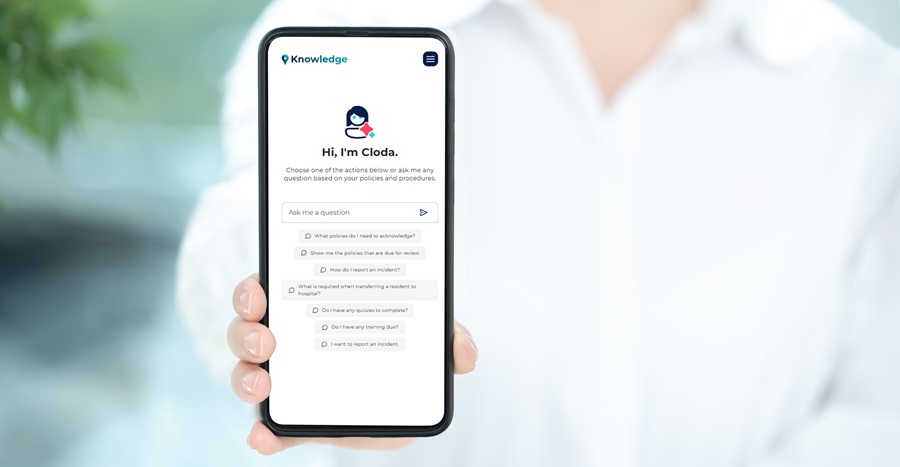
Just Ask Cloda: She has the answers you need
Instead of staff searching through folders or manuals, Cloda enables your staff to simply ask a question such as:
“What is our safeguarding process?”
“How do we manage medicines transport?”
Cloda responds immediately using the provider’s own approved policies and procedures. This ensures staff always receive accurate, consistent guidance aligned with regulatory expectations.
Multilingual Support for Inclusive Care Teams
Cloda allows staff to ask questions in their own language, and she replies in the same language — always based only on your organisation’s approved procedures. This strengthens accessibility, supports diverse workforces, and reduces the risk of misunderstandings in critical areas such as safeguarding, infection control and consent.
Mobile-Enabled Access for Frontline Teams
CQC requires providers to show that procedures are embedded into day-to-day care delivery — not locked away in office systems. Cloda is mobile-enabled, meaning staff can access essential guidance at the point of care, supporting safer practice and stronger compliance.
Comprehension Quizzes to Reinforce Understanding
Having policies is not enough — providers must be confident staff understand them. Cloda offers comprehension quizzes before staff acknowledge key procedures. This helps reinforce learning, demonstrate understanding, and strengthen accountability across the workforce.
Policy-Based Podcasts for Ongoing Learning
Cloda can turn procedures into accessible podcasts, allowing staff to engage with key policies through policy-based podcasts — supporting continuous learning beyond static documents.
Centralised Policy Management
Cloda and The Library, enable organisations to store all required policies in one secure location. This supports version control, review scheduling and clear ownership of each document.
Demonstratable Compliance and Audit-Ready Oversight
One of the biggest challenges providers face under the new registration expectations is evidencing governance in practice. Cloda provides demonstratable compliance by offering real time oversight for policy review dates, document acknowledgements and quiz completions. This creates a clear, auditable trail that simplifies compliance reporting for inspections, audits and regulatory reviews.
Conclusion: Stronger Foundations for Registration and Beyond
The 2026 update to the CQC registration requirements marks a clear shift in expectations. Registration is no longer simply about outlining intentions — it is about demonstrating operational readiness, governance oversight and embedded compliance before care begins.
Providers must now submit structured, relevant and well-managed documentation as part of the CQC registration process, and be confident that policies are not only written, but understood and applied in practice.
While this may feel like a higher bar, it also brings greater clarity. The expectations are defined. The required documents are known. The focus on governance and accountability is explicit.
For providers who prepare thoroughly, the updated process creates an opportunity to build strong foundations from day one — reducing risk, improving consistency and strengthening long-term inspection readiness.
Digital tools such as Cloda and The Library can support this approach by helping organisations centralise policies, improve staff understanding, and generate demonstrable evidence of compliance. Under the new framework, that visibility and oversight are no longer optional extras — they are part of what regulators expect.
By taking a proactive and structured approach now, providers can move through registration with confidence and set the tone for safe, well-led care from the very start.
If you would like to learn more about Cloda or book a demo, contact info@cloda.ai.

Book a Demo (1)
"*" indicates required fields