




Introduction
The Care Quality Commission (CQC) introduced the Single Assessment Framework (SAF) to modernise how health and social care services are assessed and rated. The aim was to create a consistent, flexible system that could be applied across sectors including hospitals, adult social care, primary care, and mental health services.
However, following implementation and feedback from providers, inspectors, and independent reviews, the CQC has acknowledged that aspects of the framework have not worked as intended. Concerns around complexity, transparency, and consistency have prompted the regulator to launch a consultation on improving how services are assessed and rated.
For care providers across the UK, these changes are significant. Understanding what is being proposed — and how to prepare — will be essential for maintaining compliance and ensuring services continue to demonstrate high-quality care.
This article outlines the key proposed changes to the CQC’s Single Assessment Framework and what they mean for providers.
Before we dive in, we would love to hear your thoughts below!
Poll: Do you have a digital solution in place to manage your policies and procedures?
Cast your vote and see what your peers said!
A Quick Recap: What Is the CQC Single Assessment Framework?
The Single Assessment Framework was introduced as part of CQC’s strategy to modernise regulation and provide a single, consistent approach to assessing care providers.
At its core, the framework retained the familiar five key questions used in CQC inspections:
- Safe – Are people protected from abuse and avoidable harm?
- Effective – Does care achieve good outcomes and support quality of life?
- Caring – Do staff involve and treat people with compassion, kindness, dignity, and respect?
- Responsive – Are services organised to meet people’s needs?
- Well-led – Is there strong leadership, governance, and culture?
Under the framework, these key questions are supported by Quality Statements. These describe what good care looks like from the perspectives of people using services, staff, leaders, and partners.
CQC gathers evidence from multiple sources to assess these statements, including:
- Feedback from people using services
- Staff and leadership insight
- Observations from inspections
- Outcomes and performance data
- Information shared by partners and stakeholders
The intention was to create a more dynamic and evidence-based approach to regulation, where providers could be assessed using information gathered over time rather than relying solely on scheduled inspections.
Why the Framework Is Being Reviewed
While the ambitions of the Single Assessment Framework were widely supported, many providers have reported practical challenges with its implementation.
Feedback highlighted several key issues:
- Complexity of the scoring system: Providers found the scoring methodology difficult to understand, particularly the way multiple evidence categories contributed to overall ratings.
- Lack of transparency in ratings: Many services struggled to see how individual pieces of evidence translated into final inspection ratings.
- One framework across very different sectors: Applying the same structure to hospitals, GP practices, and adult social care services sometimes created confusion around expectations.
In response, the CQC has acknowledged the need to simplify and improve the framework. The current consultation seeks feedback on changes designed to make regulation clearer, fairer, and more consistent for providers and the public.
Key Proposed Changes to the Assessment Framework
The proposed reforms focus on improving clarity and making the assessment process easier for providers to understand and navigate.
More Sector-Specific Frameworks
One of the most significant proposed changes is the reintroduction of sector-specific assessment frameworks.
These frameworks will sit within a consistent core regulatory structure based on the five key questions – Safe, Effective, Caring, Responsive and Well-led – but will be tailored to reflect the context of different sectors such as adult social care, hospitals and primary care.
This means the detailed expectations and guidance will be more closely aligned with the realities of each care setting.
For providers, this should mean clearer expectations and more relevant assessment criteria.
Simplifying How Ratings Are Calculated
The current Single Assessment Framework introduced scoring across multiple evidence categories and quality statements, which many providers found difficult to interpret.
Under the proposed changes, the CQC plans to simplify this approach.
Inspectors will still gather evidence through inspections and other regulatory activity. However, rather than assigning scores to individual quality statements, they will make a rounded assessment of all available evidence across each Key Question.
A Key Question rating (Safe, Effective, Caring, Responsive and Well-led) will then be awarded based on professional judgement and defined rating characteristics. These ratings will be combined to determine the overall service rating.
The aim is to create a clearer and more transparent approach, helping providers better understand how inspection findings translate into ratings.
Reintroducing Clear Rating Characteristics
Many providers valued the clarity of earlier inspection frameworks, which included descriptions of what each rating level looked like in practice.
CQC now plans to reintroduce clearer rating characteristics, outlining the typical features of services rated:
- Outstanding
- Good
- Requires Improvement
- Inadequate
This should help providers better understand what is expected and how their service performance aligns with inspection outcomes.
A More Digital, Data-Led Regulatory Model
Another important theme of the proposed changes is the CQC’s focus on strengthening its digital systems and use of data and insight.
The regulator is investing in improvements to its technology to better support both CQC colleagues and providers. This includes plans to redevelop elements of the provider portal and registration systems, as well as improving how information and insights generated through regulatory activity are shared with providers and stakeholders.
These developments aim to support the assessment process and improve how evidence and insights are gathered and used across the regulatory system.
For providers, this reinforces the importance of maintaining strong governance systems, accurate documentation, and clear evidence of quality and safety.
What This Means for Care Providers
The proposed changes will not fundamentally alter the core purpose of regulation — ensuring people receive safe, effective, compassionate care. However, they will influence how services demonstrate compliance and quality.
Providers should expect:
- Greater emphasis on evidence: Quality and compliance will increasingly be demonstrated through data, documentation, and feedback, not just inspection visits.
- Continuous oversight: The move toward digital monitoring means providers need to remain inspection-ready at all times.
- Clearer expectations: Sector-specific frameworks and clearer rating criteria should make it easier to understand what good care looks like.
However, meeting these expectations will still require strong governance, effective policies, and confident frontline staff who understand how to apply them in practice.
Preparing for the Updated Framework
While the consultation process continues, providers can take steps now to strengthen their readiness.
Key areas to focus on include:
Strengthening Governance and Quality Monitoring
Ensure systems are in place to regularly review:
- Safety incidents
- Complaints and feedback
- Staff training and competency
- Outcomes and performance data
Clear oversight helps organisations demonstrate well-led services, which remains a core focus of CQC assessments.
Reviewing Policies and Procedures
Policies and procedures underpin safe and effective care. Providers should ensure:
- Policies are up to date and aligned with best practice
- Staff know where to access them
- Teams understand how to apply them in daily practice
In many services, however, policies can be difficult to locate quickly, especially during busy shifts.
Supporting Staff Understanding
Frontline staff are central to delivering compliant care. Providers should prioritise:
- Regular training and refreshers
- Clear communication of policies and procedures
- Opportunities for staff to test their understanding
When staff feel confident about what is expected of them, organisations are better positioned to demonstrate quality and compliance during inspections.
Supporting Compliance with Digital Tools
As the regulatory environment becomes more digital and evidence-driven, technology is playing an increasingly important role in supporting providers.
One common challenge across healthcare settings is ensuring staff can quickly find and understand the correct policy or procedure when they need it.
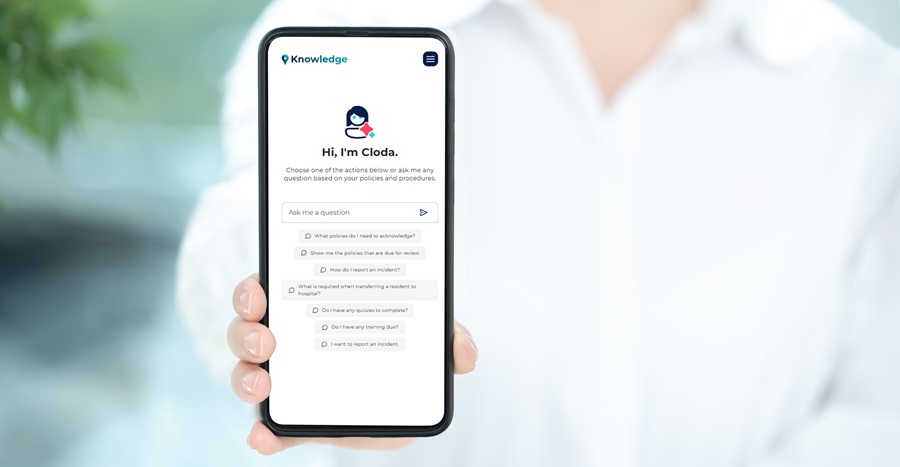
Digital assistants like Cloda are designed to address this challenge.
Cloda enables frontline staff to:
- Ask questions about policies and procedures in their own language
- Receive instant, clear answers based on organisational policies
- Access guidance quickly on mobile devices during shifts
By helping staff locate and understand policies in real time, Cloda can support:
- Consistent practice
- Stronger compliance
- Greater confidence among staff
- Better preparedness for regulatory assessment
Cloda can also support learning through short comprehension quizzes, helping staff reinforce their understanding of key procedures and requirements.
For organisations navigating evolving regulatory frameworks, tools like Cloda can help ensure that policy knowledge translates into consistent, safe care.
What Happens Next?
The CQC is currently consulting on the proposed changes and gathering feedback from providers, professionals, and people using services.
The regulator will use this feedback to refine the updated approach before implementing the revised assessment framework.
While timelines may evolve, the direction of travel is clear: a simpler, clearer, and more data-driven regulatory model.
Providers who invest now in strong governance, accessible policies, and staff understanding will be best placed to succeed under the updated framework.
Final Thoughts
The proposed changes to the CQC Single Assessment Framework represent an important step in improving how health and social care services are assessed.
By simplifying ratings, introducing sector-specific frameworks, and strengthening digital regulation, the CQC aims to create a system that is more transparent, consistent, and effective.
For providers, the key to success will remain the same: delivering high-quality care supported by strong leadership, clear policies, and confident staff.
As regulatory expectations continue to evolve, digital tools that help staff access and understand guidance in real time can play a valuable role in supporting compliance — and ultimately improving outcomes for the people who rely on care services every day.
If you would like to learn more about Cloda or book a demo, contact info@cloda.ai.


Book a Demo (1)
"*" indicates required fields