




Introduction
We have conducted a review of CQC inspections of homecare services in England, including services providing domiciliary care, live-in care and extra-care support. The reports reviewed where published in April 2026. Across the reports reviewed, the same deeper issues appeared repeatedly: weak governance, poor-quality care planning, inconsistent staff practice, limited learning from incidents, and a persistent gap between policy and what people actually experienced day to day.
What stands out most is that many services did have policies, audits, digital systems, meetings and improvement plans in place. The problem was that these systems often did not translate into safe, effective, person-centred care.
In many reports, people and relatives spoke positively about staff. Staff were often described as kind, respectful, responsive and committed. However, CQC’s concerns were about whether providers could demonstrate that care was safe, consistent, lawful, personalised and well governed.
This review focuses specifically on homecare services and draws together the strongest patterns emerging across the inspection findings. Grouped by the 5 key questions, the themes below highlight where the highest risks are appearing and what they reveal about the real causes of non-compliance
Before we dive in, we would love to hear your thoughts below!
Poll: Do you have a digital solution in place to manage your policies and procedures?
Cast your vote and see what your peers said!
CQC Findings Under Safe:
Theme: Poor risk assessment and inconsistent risk management
- Risks were often known but not fully assessed, updated or translated into clear guidance for staff.
- This affected areas such as falls, skin integrity, pressure care, diabetes, epilepsy, catheter care, allergies, nutrition, hydration, flammable emollients, moving and handling, and environmental safety.
- In some services, risk assessments were incomplete, generic, outdated or missing altogether, meaning staff could not rely on them to guide safe care.
- Risk management was often reactive rather than proactive, with action taken after inspectors identified concerns rather than through internal monitoring.
- Some care plans did not clearly explain what staff should look for, how to reduce the risk, or when concerns should be escalated to managers or health professionals.
Theme: Medicines systems were a recurring safety risk
- Medicines safety was one of the most common areas of concern. Problems included missing or generic PRN protocols, unclear topical cream instructions, missing body maps, incomplete MAR or eMAR records, and medicines stock that did not match administration records.
- Time-critical medicines were not always administered as prescribed, creating risks for people with conditions such as Parkinson’s disease.
- Some services lacked clear guidance for high-risk medicines, including medicines linked to sedation, seizures, blood thinning or complex health needs.
- Medicines audits were often in place, but they did not always identify the same errors, omissions or unsafe patterns found by inspectors.
Theme: Safeguarding, recruitment and incident learning were not always robust
- Staff often understood how to raise safeguarding concerns, but provider-level safeguarding systems were not always effective.
- Safeguarding concerns were not always tracked, investigated, documented or notified to CQC when required.
- Mental capacity assessments and best-interest decisions were not always completed where people lacked capacity or where restrictions were in place.
- Recruitment checks were not always robust, with gaps in employment history, incomplete references, inconsistent staff files or weak evidence of staff suitability.
- Incident reporting systems did not always identify themes, trends or lessons learned, which limited providers’ ability to prevent repeat risks.
CQC Findings Under Effective:
Theme: Assessments and care plans were not always current or complete
- Initial assessments were usually completed, but they were not always detailed enough or updated when people’s needs changed.
- Care plans did not always reflect people’s current health, wellbeing, communication or sensory needs.
- Important information from local authority assessments, healthcare professionals or family members was not always transferred into the provider’s care plans.
- Staff sometimes relied on verbal handovers, local knowledge or regular staff familiarity rather than reliable written guidance.
- This created a risk that care would become inconsistent when people were supported by new, temporary or unfamiliar staff.
Theme: Evidence-based care was not reliably embedded
- Services often had access to clinical advice, recognised tools or best-practice guidance, but these were not consistently reflected in care plans or daily records.
- Skin integrity, pressure damage, nutrition, hydration, diabetes, oral health, behaviour support and complex medicines were common areas where guidance was missing or incomplete.
- Some care plans referred to risks such as pressure damage or repositioning, but did not explain frequency, early warning signs or escalation actions.
- Staff were often committed and knowledgeable, but documentation did not always show that care was planned and delivered in line with current guidance.
- This meant providers could not always evidence that care was effective, preventative or based on the best available information.
Theme: Consent, MCA and outcomes monitoring were inconsistent
- Mental capacity assessments were not always decision-specific.
- Best-interest decisions did not always explain the rationale, who was involved, why the decision was necessary, or how the person’s rights were protected.
- Restrictions, equipment use or monitoring arrangements were not always supported by appropriate MCA documentation.
- Providers often described positive outcomes, such as improved confidence, independence or wellbeing, but did not always evidence these outcomes in reviews or care records.
- Reviews sometimes focused on tasks rather than whether care was helping people achieve meaningful goals or improve quality of life.
CQC Findings Under Caring:
Theme: Staff were often kind, but records did not always reflect person-centred care
- Caring was generally one of the stronger areas across the homecare reports.
- People and relatives often described staff as kind, respectful, patient, friendly and compassionate.
- Staff were frequently praised for protecting dignity, responding to distress, supporting people during illness and building positive relationships.
- However, care records did not always capture what staff knew about people’s preferences, routines, communication styles, cultural needs or emotional support needs. This meant caring practice could depend too heavily on individual regular staff rather than being embedded across the service.
Theme: Choice, independence and individuality were not always evidenced
- Staff often encouraged people to make daily choices and do what they could for themselves.
- However, records did not always show how people’s choices were offered, respected or reviewed.
- Some care plans did not clearly record what people could do independently or how staff should promote independence safely.
- Preferences around personal care, meals, routines, communication, gender of staff or cultural needs were not always recorded in enough detail.
- Where unfamiliar staff attended visits, the lack of person-centred information increased the risk of inconsistent care.
Theme: Workforce support affected caring quality
- Many staff said they felt supported, valued and able to raise concerns.
- Strong workforce wellbeing was linked to better person-centred care, consistency and morale.
- However, some reports identified gaps in supervision, training, workload management, staff fairness or leadership engagement.
- Where staff were not properly supported or enabled, providers could not always assure that staff had the confidence, competence and wellbeing needed to deliver caring support consistently.
- In some services, concerns about staff on sponsorship arrangements or training accessibility raised wider questions about workforce fairness and inclusion.
CQC Findings Under Responsive:
Theme: Person-centred planning did not always shape daily care
- Care plans often did not contain enough detail about people’s routines, preferences, goals, communication needs, personal histories or what mattered most to them.
- People were not always fully involved in developing or reviewing their care plans.
- Some people said they had not seen their care plan or were unsure whether they had been involved in shaping it.
- Essential information from local authority support plans was not always transferred into provider care records.
- This meant care could be responsive in practice when regular staff knew people well, but less reliable when staff changed.
Theme: Accessible information and communication needs were inconsistent
- Some providers had accessible information policies, but records did not always show how communication needs were assessed or met.
- Larger print, easy read formats, translated information, visual prompts or communication cards were not always offered proactively.
- People did not always receive timely or clear information about rota changes, visit times or which staff would be attending.
- Inconsistent communication created anxiety for some people and reduced confidence in the service.
- Stronger services showed that accessible communication can be done well when it is planned, recorded and embedded in daily practice.
Theme: Feedback, continuity and future planning were not always embedded
- Many providers had complaints processes, surveys or informal feedback systems, but they did not always show what changed as a result.
- Concerns were sometimes followed up verbally but not recorded, meaning learning was difficult to evidence.
- Continuity of staffing was inconsistent in some services, with people reporting that unfamiliar carers did not always know how to support them.
- Future planning was often underdeveloped, including personal goals, changing needs and end-of-life wishes.
- Some people receiving end-of-life care did not have clear end-of-life care planning documents, creating a risk that their wishes would not be fully known or followed.
CQC Findings Under Well-led:
Theme: Governance looked better on paper than in practice
- Well-led was the weakest and most consistent area of concern across the homecare reports.
- All 10 Well-led reports reviewed were rated Requires improvement.
- Many services had audits, policies, meetings, digital systems and action plans, but these did not reliably detect the same issues CQC found.
- Audits often failed to identify gaps in medicines, care planning, risk assessment, staff recruitment, MCA documentation, training or incident learning.
- The repeated pattern was not a lack of process, but a lack of effective assurance.
Theme: Leadership was often caring, but oversight was weak
- Registered managers and local leaders were often described as approachable, compassionate and committed.
- Staff frequently spoke positively about managers and said they felt supported.
- However, CQC often found that leaders did not have effective systems to monitor risk, quality, performance or outcomes.
- In some services, roles and responsibilities were unclear, with staff “doing a bit of everything” or team leaders filling gaps in governance.
- Leadership capacity, workload pressures and management turnover affected the ability to maintain consistent oversight.
Theme: Learning culture was weak and reactive
- Incidents, complaints, safeguarding concerns and audit findings were not always used to drive learning, reflection or lasting improvement.
- Some providers identified issues only after inspection feedback rather than through their own governance systems.
- Action plans did not always include clear owners, deadlines or evidence of completion.
- Feedback from people, relatives and staff was not always analysed for themes or used to improve the service.
- Improvement was often reactive rather than proactively driven by strong internal leadership.
Theme: Policy, values and culture were not consistently embedded
- Providers often had policies and values statements in place, but these were not always visible in daily care.
- Policies were not always followed in key areas such as safeguarding, medicines, recruitment, MCA, consent, risk assessment and staff training.
- Some policies were not well suited to domiciliary care and appeared more relevant to other types of services.
- Speaking-up cultures were often positive informally, but providers did not always evidence how concerns led to action or improvement.
- Workforce competence, supervision and training assurance were frequently too weak to sustain high-quality care.
Introducing Cloda: A Smart Digital Assistant for Homecare Compliance
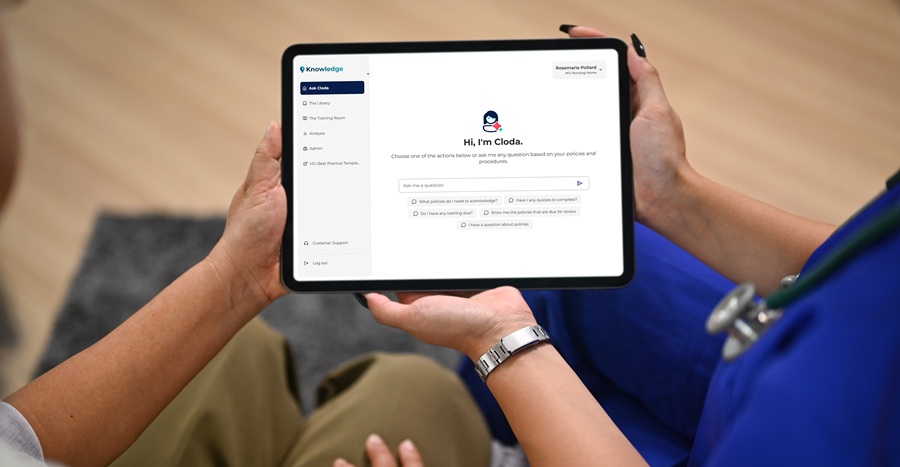
Cloda is the digital assistant available in staff’s pockets to provide the answers they need from your approved policies and procedures, in their own language. In doing so, Cloda helps staff access the right guidance when they need it, supporting safer and more consistent care aligned with your organisation’s procedures and CQC expectations.
Because Cloda is mobile-friendly, staff can access support instantly, when and where they need it. For homecare teams working across multiple locations, often alone and under time pressure, this can help reduce variation in practice and improve confidence when staff need to check what to do.
Cloda helps translate organisational policies into day-to-day practice. As the regulatory landscape evolves, and as services respond to changing CQC expectations, Cloda helps ensure staff are working from current, organisation-approved policies and procedures. Her instant support allows staff to query information when required, helping confirm that their actions align with approved internal guidance.
Built-in comprehension quizzes support managers to evidence that staff have read and understood key policies, while centralised oversight helps highlight training and policy engagement gaps before they become inspection findings. With real-time visibility of compliance, risk themes and policy engagement, Cloda enables providers to move from retrospective inspection preparation to more proactive governance.
Cloda does not replace professional judgement, instead she supports staff and leaders by making approved guidance easier to access, understand and evidence.
Conclusion
Taken together, these inspections suggest that the real causes of Requires improvement ratings in homecare are usually systemic rather than isolated. The most common pattern was not a total absence of policy, leadership or documentation, but a failure to make those systems work reliably in everyday care.
Services often had the right intentions and the right structures on paper, but not the consistent oversight, staff capability or operational follow-through needed to turn them into safe, effective, caring, responsive and well-led support.
For homecare providers, the lesson is clear: good care must be more than compassionate interactions at the point of delivery. It must also be planned, recorded, reviewed, audited and improved. Without that, even caring and committed services can struggle to evidence safety, consistency and compliance.
If you want to explore how Cloda can help support your compliance journey and make policies easier to access, understand and embed within your service, contact info@cloda.ai for more information or a demo.
Key takeaway learnings for homecare providers:
- Non-compliance is usually systemic, not isolated. The reports show that weaker ratings were rarely caused by one-off mistakes. Problems tended to build across governance, care planning, risk management, medicines, staff training, oversight and culture.
- Weak governance sits behind many frontline failures. Repeated issues in Safe, Effective, Responsive and Caring often traced back to audits that were too weak, poor managerial oversight, unclear accountability or action plans that were not embedded.
- Care planning quality is a major risk indicator. In many services, care plans were incomplete, outdated, inconsistent or too generic. When plans are weak, staff are more likely to deliver inconsistent, unsafe or non-person-centred care.
- Policy does not protect people unless it is visible in practice. Many providers had policies, values and procedures in place, but these were not reliably reflected in daily support, decision-making or staff behaviour.
- Medicines management remains a high-risk area. Common concerns included missing PRN protocols, unclear topical cream guidance, MAR/eMAR errors, poor stock reconciliation, time-critical medicines issues and weak oversight of high-risk medicines.
- Incident reporting and learning were often poor. Services did not always identify, escalate, analyse or learn from incidents properly. This meant repeated risks were not always prevented.
- Safeguarding was often weakened by poor recognition and escalation. The issue was not only whether harm happened, but whether staff and leaders recognised it early enough, reported it appropriately and acted lawfully and promptly.
- Consent, MCA and restrictive practice need much closer attention. Several reports showed weak capacity assessment, poor best-interest decision-making and restrictions or monitoring arrangements being used without sufficient legal or practical oversight.
- Person-centred care was often claimed more than evidenced. Across Caring and Responsive, people were not always supported in ways that were fully reflected in care plans, including communication needs, goals, routines, preferences, culture and future wishes.
- Good care requires a culture of follow-through. The strongest learning is that improvement depends on more than identifying issues. Providers need systems that turn feedback, incidents, audits and inspections into real operational change.

Book a Demo (1)
"*" indicates required fields