




Introduction
HCI has reviewed a sample of HIQA inspection reports for disability services published in March 2026, and the findings point to a pattern providers should not ignore. Across the centres reviewed, the same areas of compliance weakness appeared repeatedly: governance and management, training and staff development, risk management, infection prevention and control, and health care. While the severity and context varied from centre to centre, inspectors repeatedly identified gaps in oversight, delayed action on known issues, and systems that were in place on paper but were not consistently effective in practice.
What stands out most is how closely these failings are connected. Weak governance arrangements under Regulation 23 often sat behind other non-compliances, influencing how risks were identified, how staff were supported, and how residents’ healthcare needs were monitored and acted on.
This blog summarises the findings under the key regulations reviewed, to draw out the main compliance lessons from the latest HIQA disability service inspections.
Before we dive in, we would love to hear your thoughts below!
Poll: What’s the biggest obstacle to ensuring staff comply with policies and procedures in your organisation?
Cast your vote and see what your peers say!
Regulation 23 — Governance and Management
The biggest recurring weakness across the reports
Of all the regulations reviewed, Regulation 23 stands out most clearly. In many centres, inspectors found that governance systems either did not identify serious concerns, did not respond to them in time, or did not follow through on actions already identified internally.
1) Known issues were identified, but not acted on
One of the clearest themes was delay. In some centres, the provider’s own audits had already identified serious issues, but those issues remained unresolved.
- Improvements were needed in how senior management addressed identified issues. The provider had not adequately responded to concerns raised by its own audits, particularly around night-time evacuation delays and premises issues, including flooring that had been identified in 2023 and still not addressed.
- Inspectors found oversight arrangements were in place, but they failed to identify issues relating to fire safety, the maintenance of critical equipment, and an unresolved mould and damp issue in a resident’s bedroom.
- Issues raised by the person in charge were not being adequately responded to by the provider’s senior management team.
2) Audits and monitoring systems were not effective
- The provider had failed to effectively implement monitoring tools and management systems to ensure the service was effectively managed and residents were provided with a safe and quality service.
- Existing audits and planning meetings were not identifying or addressing concerns or risks, and the auditing system was not tailored to identify concerns outside the chosen theme.
- Some of the audits had action plans developed to address areas of improvement, however, it did not detail what had, and had not been audited as part of this review. For example; a medicine audit had identified improvements in medicines to be returned to the pharmacy, however, it did not identify that the registered providers policy was not been adhered to as there was no separate area in this centre to store medicines to be returned, even though the policy stated this.
- Monthly clinical reviews were conducted remotely but had not resulted in demonstrable improvements in practice.
- A review of audits identified that the current auditing and monitoring practices had failed to detect several issues subsequently identified by the inspector such as deficiencies in the care and support of residents in relation to their health needs and a failure to respond to concerns regarding the suitability of the premises.
3) Accuracy of governance information did not always provide assurance
- Governance reports contained inaccurate information, including underreporting of behaviours that challenge and safeguarding concerns. This highlighted a risk that critical information about residents’ wellbeing and necessary supports required was not being properly documented or communicated to management.
- The provider’s own audit had identified deficits in personal planning, completion of annual reviews, goal setting, and the absence of some healthcare action plans. However, despite these deficits being identified, the associated regulation was later recorded as compliant. Inspectors were unable to determine how compliance had been achieved, as the identified deficits remained outstanding at the time of inspection. When completed actions were requested, they were not available for review.
4) Governance failures affected residents’ rights and safety
- Inspectors found there had been a prolonged period where practices did not promote a human rights-based approach to care and support, and at times practices met the threshold of a safeguarding concern. The provider had not completed a formal review of its own systems to identify how these practices continued and were not addressed in a more timely manner.
- A number of Schedule 5 policies were out of date, including the risk management policy and infection prevention and control policy.
Regulation 16: Training and Staff Development
1) Training and supervision frameworks existed, but did not always provide full assurance
- Training gaps were identified in areas such as fire safety, deescalation and intervention techniques, manual handling, safe administration of medication, managing behaviour that challenges, safeguarding, and feeding, eating, drinking, and swallowing (FEDS).
- Staff members had failed to complete refresher infection prevention and control training, despite this being identified previously and also highlighted during the 2023 inspection.
- In a number of centres, staff supervision was not being carried out as frequently as set out in the Provider’s policy.
Regulation 27: Protection Against Infection
1) Resident-specific IPC risks were not always properly assessed
- Inspectors identified an absence of a risk assessment for a specific IPC risk relating to residents’ needs. There were also insufficient cleaning products to mitigate that risk, and laundry practices described by staff were not in line with effective IPC standards.
2) Cleaning equipment and storage practices needed improvement
- Improvements were needed in the storage of colour-coded mops. The storage area was cluttered and in poor repair, some mops were stored without laundering, and mop buckets were stored in receptacles that were not suitably dried.
- The inspector observed that the designated centre’s vehicle was visibly unclean and required thorough deep cleaning in order to fully meet infection prevention and control measures.
- The inspector found that high touch and high risk areas, such as items in the sensory room, including mats, and beanbags, were not adequately included in the daily cleaning practices.
- A number of maintenance issues required attention in order to ensure appropriate infection prevention and control standards
Regulation 26: Risk Management Procedures
1) Risks had been identified, but controls were weak or incomplete
- The provider audits had identified issues relating to night-time fire evacuation and premises concerns. The issue had been identified as a significant risk, but had not been appropriately addressed.
- Some risk assessments informing the risk register had not been reviewed in line with the provider’s own system. Some assessments also relied on staff training as a control measure, even though training gaps remained.
2) Risk registers did not reflect what inspectors found
- The risk register was not subject to regular review and did not reflect risks identified during inspection. A number of risk-related actions were overdue, including medication training, capacity assessment, psychology input and follow-up actions. Post-incident reviews were repetitive, and actions had not been completed to reduce recurrence.
- In another centre there was a risk register and individual risk assessments, but aspects required improvement. Risk ratings in the register did not align with the assessments themselves, and a key risk relating to a staff member not having training to administer medicines had not been identified as a risk.
3) Serious environmental and health risks were not being managed properly
- In one centre, the oil-fired boiler had not been serviced since 2020. There was no carbon monoxide alarm in the boiler room, the boiler was leaking water, and the flue system was in a poor state of repair.
- The risk management documentation did not accurately reflect current risks or provide staff with clear guidance on how to manage emerging or ongoing concerns.
- Risks relating to mobility, bowel dysfunction, medicine administration and other health concerns were not accurately assessed or reviewed.
- Some restrictive practices had no risk assessments and had not been approved through the provider’s committee.
Regulation 6: Health Care
1) Residents’ healthcare needs were not always translated into care planning
- In one centre, a resident was not receiving appropriate healthcare. Following a diagnosis in September 2025, there was no care plan or guidance for staff on how to support the resident. The person in charge had contacted the GP to request a dietitian review, but no further steps had been taken.
2) Clinical advice was not always followed through
- The inspector’s review of health observation records and medicine administration records found that advice given was not implemented consistently in practice. Medicine continued to be administered when it should have been withheld, resulting in side effects affecting a resident’s participation in activities. There was no evidence of escalation for further clinical advice when the initial intervention did not improve health outcomes.
3) Health planning records lacked assurance
- Assurances could not be provided to the inspector in relation to the oversight and management of residents personal plans in the centre. There were no records to verify whether residents had been supported with information about future healthcare decisions, including end-of-life wishes.
Conclusion: What these reports are telling us
Taken together, these findings show that many of the compliance failings identified by HIQA are not simply isolated issues at centre level, but signs of wider pressure on governance, oversight, and the consistent implementation of policy in practice. Across the disability service inspection reports reviewed by HCI, weak governance often sat behind other failings, influencing how risks were managed, how training gaps were addressed, how infection prevention measures were applied, and how residents’ healthcare needs were followed through.
In many cases, the issue was not the absence of systems, but the inability of those systems to give providers real assurance that staff had access to the right guidance, understood what was expected, and could act on it consistently in day-to-day care.
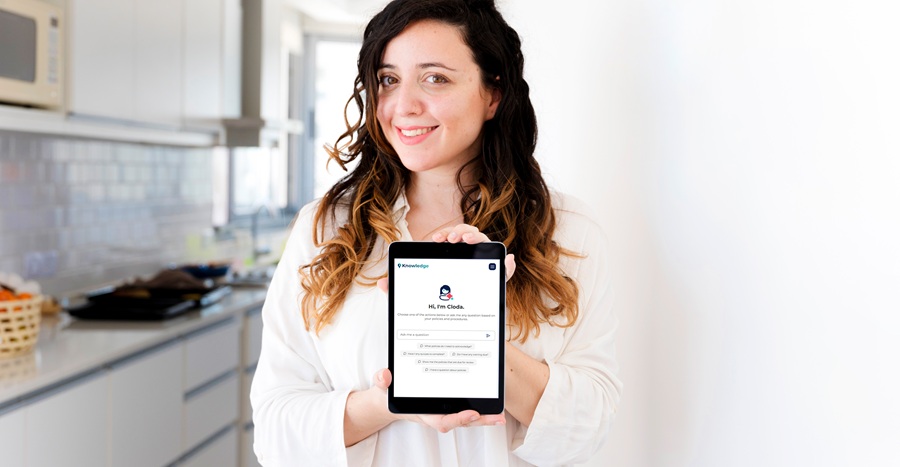
That is where digital support can make a meaningful difference. Tools like Cloda help strengthen frontline compliance by giving staff instant access to policies and procedures in their own language, supporting understanding through quizzes, and making critical guidance available at the point of care on mobile. When providers are under pressure to translate governance into practice, that kind of immediate, reliable access to the right information can play an important role in supporting safer care, stronger compliance, and better inspection readiness.
Introducing Cloda: A Smart Digital Assistant for Disability Service Compliance
For disability services looking to strengthen HIQA compliance and support staff utilisation of your policies and procedures, Cloda is the compliance management system you need.
Cloda is the digital assistant available in staffs’ pocket to provide the answers they need to your policies and procedures — in their own language. In doing so, Cloda helps staff to deliver safer care, aligned with your approved procedures, and HIQA’s expectations. Because Cloda is mobile-friendly, staff can access her support instantly, whether they are in a residential care setting or out in the community with service users.
Cloda helps translate HIQA regulations into day-to-day practice. As the regulatory landscape evolves with updates to standards, new thematic inspections, and revised national guidance, Cloda ensures staff are always working from the most current, organisation-approved policies and procedures. Her instant support allows staff to query information when required, helping confirm that their actions align with up-to-date regulatory expectations. With instant access to procedures, teams reduce variation in practice and improve consistency.
Built-in comprehension quizzes support managers to evidence that staff have read and understood key policies, while centralised training oversight helps streamline mandatory training requirements and highlight gaps before they become inspection findings. With real-time visibility of compliance, risk themes, and policy engagement, Cloda enables providers to move from retrospective inspection preparation to proactive governance — strengthening assurance under Regulation 23 and across the wider regulatory framework
For more information or a demo of Cloda, contact info@cloda.ai or call 01 629 2559.


Book a Demo (1)
"*" indicates required fields