




Introduction
In April 2026, HIQA published five inspection reports for International Protection Accommodation Services in Ireland. The reports show many examples of committed staff, positive relationships with residents and local efforts to improve services.
However, the reports also point to a recurring and important issue: policies and procedures were not always sufficiently developed, aligned, understood or implemented in practice.
Policies are not simply documents for inspection purposes. In high-risk, highly regulated environments such as IPAS accommodation, policies and procedures are the foundation for safe, consistent and accountable practice. They guide staff decision-making, support safeguarding, reduce operational risk, clarify roles and responsibilities, and help providers demonstrate compliance with the National Standards for Accommodation Offered to People in the Protection Process.
The findings suggest that in some centres, the issue was not only whether policies existed, but whether they were practical, current, accessible and embedded into day-to-day operations.
Summary of Findings
Across the inspection reports, HIQA identified a number of policy-related weaknesses. These included missing policies, policies that were not aligned with national requirements, procedures that lacked practical guidance, and policies that had been developed but were not being implemented consistently.
Key findings included:
Theme 1: Missing policies
In one centre, HIQA found that there was no local policy to guide staff on the issuing of verbal or written warnings to residents. This created a gap in procedural fairness and consistency, particularly in an environment where decisions affecting residents should be transparent, proportionate and clearly documented.
Where policies are absent, staff may be left to rely on individual judgement rather than agreed organisational procedures. This increases the risk of inconsistent practice and makes it harder for providers to evidence fair decision-making.
Theme 2: Policies not aligned with national requirements
Several reports identified policies that did not fully reflect national requirements or sector-specific expectations.
For example, HIQA found that a recruitment policy did not align with the IPAS child protection policy, particularly in relation to the requirement to obtain three references for new staff. In another centre, recruitment practices were also found to be inconsistent with relevant vetting and child protection expectations.
This is a significant issue. Recruitment policies in IPAS services must do more than describe a general HR process. They need to reflect the safeguarding responsibilities of services that accommodate children, vulnerable adults and people who may have experienced trauma, displacement or exploitation.
Where policies are not aligned with national guidance, providers may unintentionally create gaps in safeguarding, accountability and regulatory compliance.
3. Policies lacking sufficient practical guidance
HIQA also found examples of policies that existed but did not provide enough practical guidance for staff.
In one centre, safeguarding statements and policies did not provide robust guidance on how staff should respond to adult safeguarding or child protection concerns. The policy for managing allegations against staff also lacked clear detail on how such allegations would be managed by the provider.
This highlights an important distinction: having a policy is not the same as having an effective policy.
For policies to support safe practice, they must be clear, practical and usable. Staff need to know:
- what to do
- when to escalate
- who to report to
- what records to complete
- what timelines apply
- how concerns will be reviewed and followed up
Without this level of clarity, even well-intentioned staff may respond inconsistently to serious issues.
Theme 4: Policies not implemented in practice
A recurring concern across the reports was the gap between written policy and actual practice.
HIQA found examples where centres had policies, procedures or commitments in place, but these were not fully implemented. For example:
- The centre had committed to using a standardised meeting agenda covering key areas such as safeguarding, risk, fire and incidents, but this had not been implemented.
- Fire drills had not been completed in line with local policy.
- The risk management policy did not guide staff on regular review of ongoing risks, meaning all risks had the same annual review period regardless of severity.
- The supervision policy had not been implemented, with formal structured supervision not taking place for almost a year.
- The risk escalation procedures were not followed in relation to known fire and structural risks.
- The centre had developed a supervision policy, but it was not yet fully implemented for all staff.
These findings show that compliance depends not only on policy development, but on implementation, monitoring and assurance. A policy that is not understood, accessed or followed in practice will not protect residents, support staff or satisfy regulatory expectations.
Theme 5: Policies requiring consolidation or development
HIQA also identified areas where policies required further development or consolidation.
In one centre, there were multiple policies relating to reception and vulnerability assessment that required consolidation. This created a risk of confusion and inconsistency in how residents’ needs were identified, recorded and followed up.
Another centre had not yet developed a supporting guidance document for the Reception Officer role. This is important because the Reception Officer role is central to helping identify and respond to residents’ needs, including special reception needs and vulnerabilities.
Where multiple overlapping policies exist, or where role-specific guidance is missing, staff may not have a clear operational framework for carrying out their responsibilities.
The Overall Policy Message from HIQA
Across the five reports, HIQA’s concern was often not simply that policies were missing. The broader issue was that policies were sometimes:
- incomplete
- inconsistent with national requirements
- lacking practical detail
- not accessible enough to guide daily practice
- not embedded through supervision, training and governance
- not monitored for implementation
This points to a wider policy implementation gap.
In IPAS services, policies and procedures must be living tools. They should support staff at the point of need, guide consistent decision-making, and provide providers with assurance that standards are being applied in practice.
How Cloda Supports Compliance and Best Practice in IPAS Services
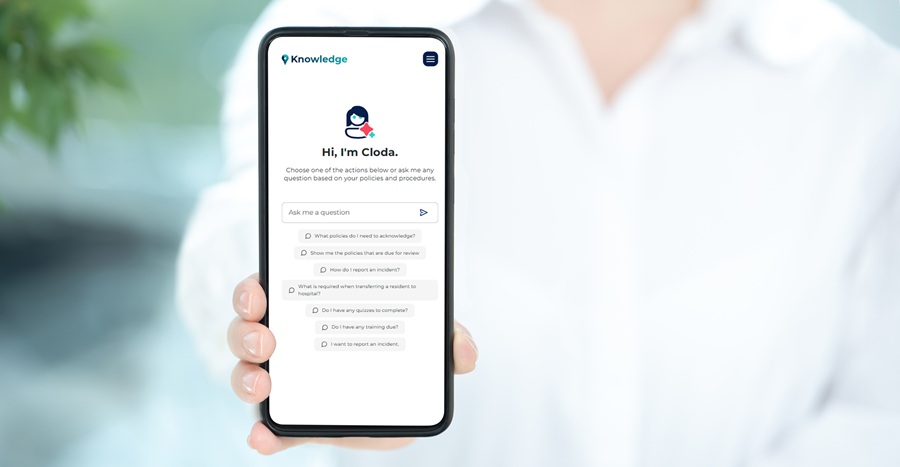
Cloda is the digital assistant available in staff’s pocket to instantly provide the answers they need from your policies and procedures. For IPAS providers, this is particularly important. Staff are often working in complex environments where they need to respond quickly and consistently to issues involving safeguarding, resident welfare, risk, incidents, complaints, emergency procedures and governance.
Through The Library, IPAS centres can maintain a centralised, digital repository of best practice policies aligned with the National Standards for Accommodation Offered to People in the Protection Process.
Cloda supports staff by:
- Providing instant answers to policy and procedure questions.
- Allowing staff to access guidance in their own language.
- Delivering quick comprehension quizzes to reinforce understanding.
- Enabling mobile access, ensuring staff can find information when they need it.
For IPAS providers managing complex operational environments, this means staff can quickly access guidance on critical areas such as:
- safeguarding and protection
- incident management
- emergency preparedness
- resident rights and person-centred support
- risk management and governance
In addition, Cloda includes over 60 best practice policy and procedure templates specifically designed for International Protection Accommodation Services. These templates support providers in establishing clear governance frameworks, safeguarding procedures, workforce policies, risk management systems, and resident support protocols aligned with regulatory expectations.
By combining best practice policies with instant access to guidance through Cloda, services can ensure staff always have the right information when needed, helping organisations strengthen compliance, embed consistent standards, and create safer environments for residents and staff alike.
For more information or a demo of Cloda, contact info@cloda.ai or call 01 629 2559.


Book a Demo (1)
"*" indicates required fields