




Introduction
The regulation of home support services in Ireland is moving closer. While the final regulations and HIQA National Standards are still being developed, providers should not assume that preparation has to wait until everything is finalised.
Many providers are understandably reluctant to make significant changes to policies, procedures, governance systems, and quality processes until the final requirements are published. However, this approach could create unnecessary pressure later.
HIQA’s regulatory approach is typically informed by national policy, legislation, standards, and recognised best practice. This means that although the final home support standards are not yet complete, many of the likely expectations are already visible. Providers can use this time to build stronger foundations and reduce the burden of compliance when regulation arrives.
Before we dive in, we would love to hear your thoughts below!
Poll: What is your biggest challenge in preparing your home support service for regulation?
Cast your vote and see what matters to your peers!
1. Start Working Towards Existing Standards and Guidance
One of the key messages from HCI’s recent webinar “Home Support Services: Prequel to Regulation – Requirements Now For Compliance Later” was that home support providers do not need to wait for the final HIQA standards before taking meaningful action. There are already several national policies, standards, and guidance documents that provide a strong indication of what future regulation is likely to expect.
These include the HSE Enterprise Risk Management Policy and Procedures (2023), the HSE Incident Management Framework (2020), HSE Open Disclosure Policy, the HSE Your Service Your Say complaints process, national safeguarding standards and HSE policies, the National Consent Policy, and HIQA’s National Standards for Infection Prevention and Control in Community Services.
The webinar highlighted that future regulation is expected to cover areas such as care and welfare, service user rights, assessment and care planning, staff training, safeguarding, infection prevention and control, risk management, complaints, records, incident notification, and quality assurance. These are not new concepts for the sector. They already exist across health and social care guidance.
The opportunity for providers is to begin aligning current systems with these expectations now, rather than waiting for the final standards and trying to implement everything at once.
2. Strengthen Your Risk Management Framework
Risk management is likely to be one of the most important areas for home support providers to strengthen before regulation arrives.
Many organisations already have a risk register, but future expectations will likely go further than simply listing risks. Providers will need to demonstrate that they have a structured approach to identifying, assessing, managing, reviewing, and learning from risk.
This should include corporate risks, such as changing regulation or workforce pressures; service provision risks, such as safeguarding or continuity of care; individual service user risks, such as identification of vulnerabilities or environmental risks in the home; and health and safety risks, including lone working, manual handling, infection control, and hazardous waste.
A strong risk management process should be active and regularly reviewed. It should clearly define roles and responsibilities, involve the right people, identify controls, assign actions, and ensure learning is shared across the organisation.
The key point is that risk management should not sit in a folder. It should guide decision-making and support safer, more consistent care.
3. Develop Robust Incident Management Processes
Incident management is another area where home support providers can prepare now.
Future regulation is likely to expect clear processes for reporting, categorising, reviewing, and learning from incidents. This includes understanding the HSE Incident Management Framework, applying open disclosure where appropriate, and ensuring that incidents lead to meaningful improvement.
A strong incident management process should cover what happens immediately after an incident, who needs to be notified, how the incident is categorised, what level of review is required, and how learning is captured.
A culture of openness, transparency, and accountability should be promoted by Senior Management. Incident management should not be viewed as a blame process. It should be part of a wider quality and safety system that helps providers identify trends, reduce recurrence, and improve outcomes for service users.
Regulators will not only want to know that incidents are recorded. They will want to see evidence that the organisation learns from them.
4. Review Your Safeguarding Arrangements
Safeguarding is likely to be a central focus of regulation for home support services.
Providers should ensure that safeguarding is not treated as a standalone policy, but as part of everyday practice. This includes clear leadership, staff training, safe recruitment, vetting, supervision, professional boundaries, protection of service user rights, and clear reporting pathways.
It is also important to differentiate between proactive and reactive safeguarding. Proactive safeguarding includes the steps providers take to reduce the risk of harm before concerns arise. Reactive safeguarding includes how providers respond when a concern, allegation, or disclosure is made.
Providers should be able to demonstrate that service users are protected from abuse, neglect, financial harm, institutional abuse, and discriminatory practice. They should also be able to show that concerns are taken seriously, investigated appropriately, and escalated where required.
Safeguarding should be embedded into the culture of the organisation, not only activated when something goes wrong.
5. Focus on Infection Prevention and Control
Infection prevention and control remains a key quality and safety requirement for home support services.
Providers should have clear IPC policies and procedures covering hand hygiene, PPE, standard precautions, transmission-based precautions, waste management, sharps management, laundry, equipment cleaning, and outbreak response.
IPC is not only about having guidance in place. Providers also need clear accountability, staff understanding, monitoring processes, audits, and service user communication where required.
In a home support setting, IPC can be more difficult to monitor because care is delivered across multiple individual homes. This makes staff training, practical guidance, supervision, and audit processes particularly important.
Providers should be able to show that IPC requirements are understood, implemented, monitored, and reviewed as part of the organisation’s wider quality and safety system.
6. Build a Quality Assurance Programme
Quality assurance is where all of these areas come together.
A strong quality assurance system helps providers understand whether their service is safe, effective, consistent, and improving. It also gives managers the evidence they need to make informed decisions.
There are several core components of quality assurance, including internal audits, KPIs, service user feedback, staff feedback, quality improvement plans, and governance reporting.
Examples of useful KPIs could include care plan review completion, training compliance, incident and complaint trends, infection prevention and control indicators, audit completion, staff retention, and service user satisfaction.
The important point is that quality assurance should not be a once-a-year exercise. It should be an ongoing cycle of monitoring, reviewing, learning, and improving.
When regulation arrives, inspectors are likely to ask not only whether providers have policies in place, but how they know those policies are working. Quality assurance provides that evidence.
The Providers Who Start Now Will Have the Advantage
The final regulations and HIQA National Standards may not yet be complete, but the direction of travel is clear.
Future regulation is likely to place strong emphasis on governance, risk management, safeguarding, incident management, complaints, infection prevention and control, consent, quality assurance, service user rights, staff training, and records management.
Providers who begin strengthening these areas now will be better prepared for licensing, inspection, and ongoing compliance. More importantly, they will also be strengthening the quality and safety of their services today.
Waiting for final standards may feel safer, but it could leave providers trying to do too much in too little time. Starting now allows organisations to take a more structured, manageable, and sustainable approach.
How Cloda Supports Providers in Meeting Compliance Expectations with a Suite of Best Practice Policy and Procedure Templates
We have developed a comprehensive Home Support Policy and Procedure Suite, covering key areas such as safeguarding, risk management, incident management, complaints, consent and assisted decision-making, infection prevention and control, quality assurance, lone working, governance, and service user rights.
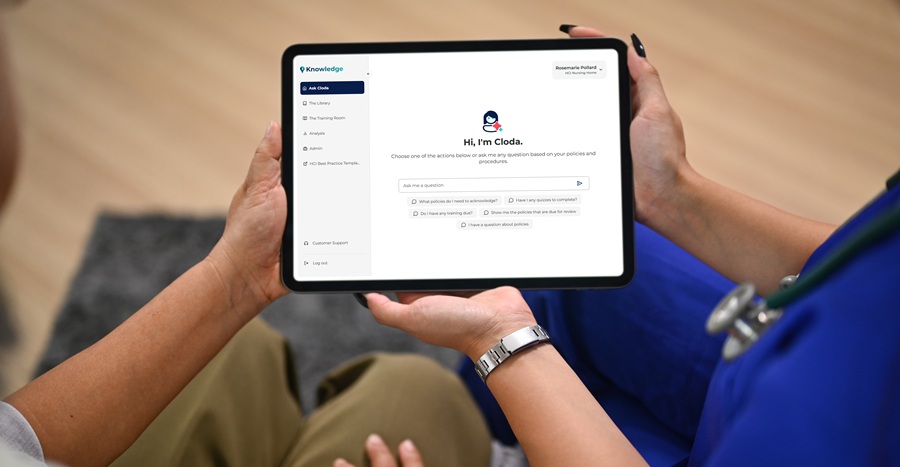
To help providers make these policies easier to use in practice, Cloda gives staff instant access to the information they need from their organisation’s policies and procedures. This is particularly valuable for home support teams and lone workers, who often need quick, reliable guidance while working independently in the community.
Cloda can provide you homecare service with:
- Best Practice Procedures: Cloda comes with over 34 evidence-based policies and procedures tailored specifically for home support, and in line with HSE and best practice requirements. HCI has a dedicated Best Practice Team that ensure all policies and procedures are kept up to date with home support aged-care best practice requirements.
- Just Ask Cloda: Staff can ask Cloda about any care process and she will provide the answers they need directly from your best practice procedures.
- Multilingual Support: Staff can ask Cloda questions in their own language, and she replies in their language.
- Comprehension of Procedures: Cloda offers comprehension quizzes before staff acknowledge policies, helping to ensure understanding, reinforce learning, and strengthen accountability.
- Demonstratable compliance: Every interaction — from policy updates to staff acknowledgments — is logged digitally. This creates a clear, auditable trail that simplifies compliance reporting for inspections, audits, and regulatory reviews.
The standards may not be finalised yet, but the foundations of compliance are already clear. The time to start preparing is now.
For more information on our homecare policy and procedure bundle or a demo of Cloda contact info@cloda.ai or call 01 629 2559.
Key takeaways
- Regulation is coming, but many of the likely expectations are already clear.
- Providers can start preparing now using existing standards, policies, and guidance.
- Risk management should be structured, active, and regularly reviewed.
- Incident management should focus on reporting, open disclosure, learning, and improvement.
- Safeguarding must be embedded into everyday practice, not treated as a standalone policy.
- Infection prevention and control remains a core quality and safety requirement.
- Quality assurance systems should provide evidence of audits, KPIs, feedback, and continuous improvement.
- Providers who act now will be better prepared when licensing and inspections begin.

Book a Demo (1)
"*" indicates required fields