



Introduction
HIQA Thematic Inspections of Adult Safeguarding do more than assess whether a service has a safeguarding policy in place. They examine whether the wider systems around service users are effective in practice.
HCI reviews of recently published HIQA safeguarding thematic inspection reports for disability services found that Regulation 23: Governance and Management and Regulation 26: Risk Management Procedures were the most frequently identified areas of non-compliance. Each was rated not compliant in three of the five inspections reviewed.
Other not-compliant findings were identified under staffing, premises, individual assessment and personal planning, protection, residents’ rights, and medicines management.
Together, the reports show that safeguarding risks rarely sit under one regulation alone. They often emerge where governance, staffing, assessment, risk management and the living environment are not working together effectively.
Before we dive in, we would love to hear your thoughts below!
Poll: What’s the biggest obstacle to ensuring staff comply with policies and procedures in your organisation?
Cast your vote and see what your peers say!
Regulation 23: Governance and management
Governance and management was rated not compliant in three of the five inspections reviewed.
In one service, the provider was already aware of recurring safeguarding incidents and difficulties between residents sharing the same home. However, the actions taken had not reduced the risks.
Inspectors found that:
- Residents’ compatibility had not been formally assessed.
- The impact of repeated incidents on residents had not been adequately reviewed.
- There was no clear, time-bound plan to address the concerns.
- Staffing and transport arrangements did not always support the implementation of agreed safeguards.
- The service had not demonstrated that it could consistently meet residents’ safeguarding needs.
The findings showed that identifying a concern was not enough. The provider also needed to demonstrate that its response was effective and that service users’ lived experience had improved.
In another centre, weaknesses were identified in the accuracy and effectiveness of provider oversight. One governance report recorded only one safeguarding concern when five had been notified.
Inspectors also found that:
- Actions from previous reviews remained outstanding.
- Local audits had failed to identify significant risks.
- Provider reports contained incomplete or inaccurate information.
- Staff meetings were not taking place frequently enough.
- Families and representatives had not been consulted as part of the annual review.
Where governance information is inaccurate or incomplete, senior management may not have a reliable picture of the risks within a service.
A third service received a not-compliant judgment after inspectors identified weaknesses relating to financial management, medication safety and future service planning.
Local staff believed residents were subject to an annual spending limit, although the provider later stated that no such restriction existed. Inspectors also questioned whether plans for the future use of the service had fully considered residents’ assessed, environmental and sensory needs.
These findings underline the importance of governance systems that do more than generate reports. Providers must be able to demonstrate that risks are accurately identified, escalated, addressed and reviewed until sustainable improvement is achieved.
Regulation 26: Risk management procedures
Risk management procedures were also rated not compliant in three of the five inspections.
In one centre, risks associated with a resident’s continuous use of oxygen had not been formally assessed. There was no warning signage in place, and potential fire risks associated with oxygen storage had not been fully considered.
Inspectors also found that:
- Food-thickening agents were not consistently stored securely. This was a repeat finding from an earlier inspection.
- Some staff were unaware of the requirement to secure the products.
- Privacy risks had not been assessed after a shared bathroom door was removed. No temporary controls had been introduced to protect residents’ dignity.
These findings demonstrate that risk management must extend beyond traditional health and safety concerns. Privacy, dignity and the ability to follow agreed safeguards should also be formally assessed.
Another service had several unaddressed environmental and individual risks.
These included:
- Obstructed fire evacuation routes.
- Missing fire assembly-point signage.
- Unmanaged asbestos risks.
- Unclear vehicle documentation.
- Overdue risk assessments relating to finances, falls and people handling.
Local audits had not identified several of these issues, raising questions about whether the provider’s assurance processes were sufficiently robust.
In a third centre, inspectors found that several fire doors did not close properly or were being wedged open. Staff were aware of some of the problems, but the concerns had not been formally recorded, risk assessed or escalated.
Routine checks and audits had also failed to identify the extent of the fire-safety risks.
Across these reports, the central issue was not always that staff were unaware of a hazard. In several cases, the risk was known locally but had not been converted into a documented assessment, assigned action and monitored response.
Regulation 15: Staffing
Inspectors found that staffing arrangements did not consistently allow safeguarding controls to be implemented.
Safeguarding plans required measures such as:
- One-to-one support.
- Supervision when residents were together.
- Separate routines or transport arrangements.
- Additional support during personal care or periods of distress.
However, staff could not always provide this level of support because they were assisting other residents. Some safeguarding incidents occurred while staff were providing personal care elsewhere in the house.
There were also staffing vacancies, while residents’ documented staffing needs were not always reflected consistently across assessments, plans and rosters.
This finding is particularly important because a safeguarding plan can only be effective when the service has the resources to deliver it on every shift.
Providers should therefore check whether staffing controls are practical in real operating conditions, including during personal care, staff breaks, lone working and periods when several residents require support at the same time.
Regulations 17: Premises
The physical layout of the home was not adequately meeting the number and assessed needs of residents.
Inspectors found that:
- Communal space was limited.
- Some residents experienced difficulty using the sitting room at the same time.
- The environment contributed to anxiety, distress and negative interactions.
- One resident required a low-stimulation environment, but shared spaces were often busy and noisy.
- Residents’ ability to use communal areas freely was being affected.
This shows why the suitability of a designated centre cannot be assessed only in terms of maintenance and accessibility. Providers must also consider whether the environment supports residents’ sensory needs, relationships, privacy and emotional well-being.
Regulation 5: Individual assessment and personal plan
Although safeguarding plans and risk assessments were in place, inspectors found that they were not proving effective.
Key concerns included:
- Staffing requirements were described inconsistently across residents’ records.
- One service users’s plan referred to two-to-one support, but staffing levels did not always allow this.
- Difficulties between residents had been documented, but compatibility had not been formally assessed.
- It was unclear whether the service could continue to meet one resident’s changing needs.
- Existing plans had not resolved the risks affecting residents.
Personal plans must therefore do more than describe a service user’s needs. They should provide staff with clear, consistent and practical guidance that can be implemented within the service’s actual resources and environment.
Where safeguarding incidents continue, providers should review whether the service user’s assessment, staffing requirements, environmental needs and compatibility with others remain accurate.

Regulation 8: Protection
HIQA found that residents were not being effectively or appropriately safeguarded from recurring peer-to-peer incidents.
One service had submitted:
- 33 safeguarding notifications in 2024.
- 27 notifications in 2025.
- Eight notifications by the date of the 2026 inspection.
The incidents primarily related to allegations, negative verbal interactions and the effect service users’ actions had on one another.
Although safeguarding plans and controls had been developed, inspectors found that:
- The controls could not always be implemented.
- Staffing arrangements did not provide consistent supervision.
- Service users’ compatibility remained unresolved.
- Previous strategies had not reduced the risk of further incidents.
- Service users’ lived experience continued to be negatively affected.
The findings illustrate the difference between having a safeguarding process and achieving an effective safeguarding outcome.
Regulation 9: Residents’ rights
Inspectors identified several concerns affecting privacy and dignity.
These included:
- Inadequate privacy when residents used shared bathrooms.
- Personal toileting equipment being used without sufficient privacy safeguards.
- A clear glass panel in a resident’s bedroom door.
- A shared bathroom door being removed without temporary privacy measures.
- Personal information not being securely protected.
- A service user being unable to access a preferred day service.
These findings demonstrate that safeguarding is closely linked to dignity, autonomy and residents’ ability to make choices about their daily lives.
Providers should ensure that rights-related risks are included in audits and risk assessments rather than being treated only as environmental or operational issues.
Regulation 29: Medicines and pharmaceutical services
Inspectors found that a pain-relief medicine had been administered at a dose that did not correspond with the medicine dispensed by the pharmacy. This had occurred six times during the two months before inspection.
Further concerns included:
- No stock-control process for one regular medication.
- A self-medication assessment that did not reflect the support provided in practice.
- No appropriate risk assessment for the self-administration of high-risk medication.
- Insufficient consideration of PRN and short-term medicines.
These findings raised concerns about medication safety, the accuracy of assessments and the effectiveness of clinical oversight.
Medication management is also a safeguarding issue, particularly where residents depend on staff to administer, monitor or support them with their medicines.
What do the findings tell providers?
The reports show that the most serious safeguarding risks were often connected across several regulations.
For example, recurring incidents between residents were linked not only to Regulation 8, but also to:
- Governance and management.
- Staffing.
- Individual assessment and planning.
- Premises.
- Residents’ rights.
Similarly, fire-safety and environmental risks were connected to weaknesses in risk management, auditing, maintenance and governance oversight.
Providers should therefore avoid reviewing non-compliance findings in isolation. A finding under one regulation may point to a wider system failure.
Introducing Cloda: A Smart Digital Assistant for Disability Service Compliance
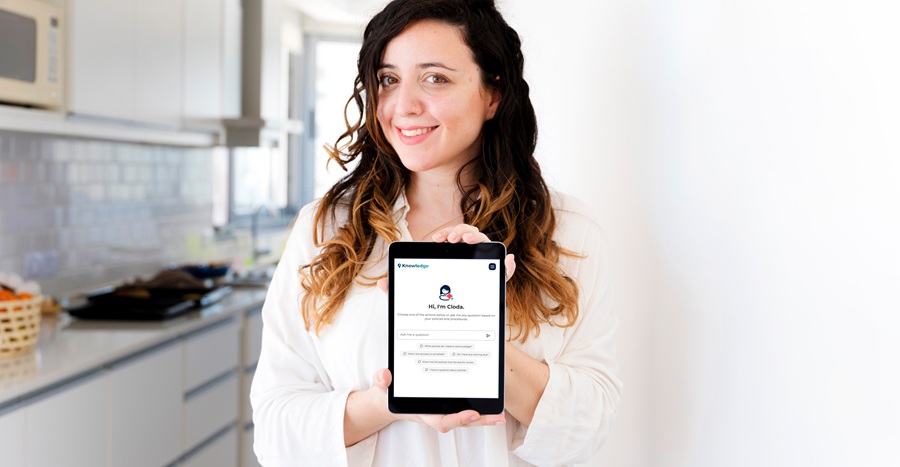
For disability services looking to strengthen HIQA compliance and support staff utilisation of your policies and procedures, Cloda is the compliance management system you need.
Cloda is the digital assistant available in staffs’ pocket to provide the answers they need to your policies and procedures — in their own language. In doing so, Cloda helps staff to deliver safer care, aligned with your approved procedures, and HIQA’s expectations. Because Cloda is mobile-friendly, staff can access her support instantly, whether they are in a residential care setting or out in the community with service users.
Cloda helps translate HIQA regulations into day-to-day practice. As the regulatory landscape evolves with updates to standards, new thematic inspections, and revised national guidance, Cloda ensures staff are always working from the most current, organisation-approved policies and procedures. Her instant support allows staff to query information when required, helping confirm that their actions align with up-to-date regulatory expectations. With instant access to procedures, teams reduce variation in practice and improve consistency.
Built-in comprehension quizzes support managers to evidence that staff have read and understood key policies, while centralised training oversight helps streamline mandatory training requirements and highlight gaps before they become inspection findings. Providers can also use Cloda’s Evaluation Station to schedule and complete audits, identify gaps, assign improvement actions and monitor them through to closure.
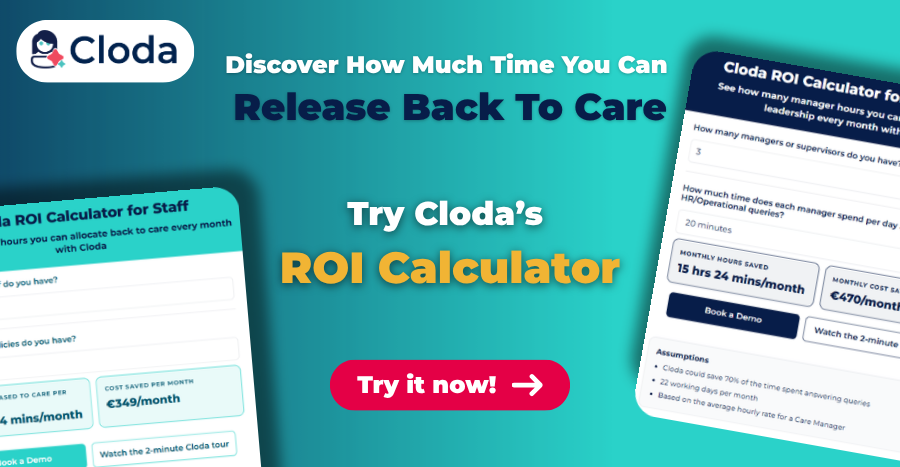
With real-time visibility of compliance, risk themes, and policy engagement, Cloda enables providers to move from retrospective inspection preparation to proactive governance — strengthening assurance under Regulation 23 and across the wider regulatory framework.
For more information or a demo of Cloda, contact info@cloda.ai or call 01 629 2559.
Key takeaways
- Governance was a leading concern — Regulation 23 was rated not compliant in three of the five inspections.
- Risk management gaps were widespread — Regulation 26 was also rated not compliant in three reports.
- Safeguarding failures crossed several regulations — weaknesses were linked to staffing, premises, personal planning, medicines and residents’ rights.
- Controls were not always workable — some safeguarding measures could not be implemented because of staffing, transport or environmental limitations.
- Known risks were not always escalated — inspectors found examples of risks being recognised locally but not formally assessed, recorded or acted upon.
- Repeated incidents required stronger action — recurring concerns were not always supported by compatibility assessments, time-bound plans or evidence of improved outcomes.
- Residents’ lived experience remained central — non-compliance affected privacy, dignity, safety, autonomy and access to shared spaces.
- Providers need connected assurance systems — policies, audits, training, risk management and improvement actions must work together to demonstrate effective safeguarding.

Book a Demo (1)
"*" indicates required fields

As Chief Research Officer, Oonagh is responsible for the development of Quality and Safety Management Systems that effectively address organisational regulatory requirements while meeting business needs. Through her evaluation of emerging research, tools and technologies, Oonagh ensures that best-in-market techniques are utilised throughout HCI services. A qualified ISO Lead Auditor and experienced lecturer at NUIG, she has been central to HCI’s work with regulatory bodies in developing standards for key care sectors.