



What are the MHC National Standards for Community (Residential) Mental Health Centres?
The MHC National Standards for Community (Residential) Mental Health Centres set out what safe, high-quality, person-centred and recovery-focused care should look like in 24-hour staffed community mental health residences in Ireland.
Published by the Mental Health Commission (MHC) in November 2026, they are the first national standards written specifically for these centres.
This means for the first time, these centres are about to be regulated. Under the Mental Health Act 2026, community mental health centres will need to register with the MHC and will face monitoring, inspection and enforcement. Until now, the MHC could inspect 24-hour residences but had no power to regulate them.
The Standards are organised into six themes: leadership and governance; person-centred service delivery; a holistic approach to care and treatment; a safe, accessible and therapeutic environment; recovery and empowerment; and workforce, resources and information management. Each standard describes the outcome required, gives “feature statements” showing what compliance looks like, and ends with an “I Perspective” that explains it from the resident’s point of view.
This guide explains who the Standards apply to, what each theme requires, the biggest changes providers should prepare for, and how a digital quality management system can help you evidence compliance.
Who do the Standards apply to?
The Standards apply to registered community mental health centres: any community-based residential centres, other than acute centres, that provide specialist mental health care and treatment for people with an enduring mental disorder or other mental health difficulty, and that are staffed on a 24-hour basis. In practice, this covers what are currently known as 24-hour staffed or high-support community residences.
The Mental Health Act 2026 creates three categories of regulated service:
Category | What it covers |
Registered acute mental health centres | Inpatient units where acute care and treatment are provided (today’s approved centres) |
Registered community mental health centres | 24-hour staffed community residential centres — the subject of these Standards |
Registered community mental health services | Other community-based services providing care and treatment, such as community mental health and rehabilitation teams |
What does “staffed on a 24-hour basis” mean?
The MHC interprets “staffed on a 24-hour basis” as staff being continuously available to residents, not necessarily physically present in the building at all times. A centre meets the definition if any of the following apply:
- Staff are physically present whenever one or more residents are present.
- Staff are present for most of each 24-hour period, with formal on-call arrangements for the rest.
- Staff maintain continuous availability through a combination of physical presence and technology-enabled remote monitoring.
Residents being out at work, day programmes or with family does not take a centre outside the definition. The MHC is also clear that a provider cannot avoid registration by deliberately reducing staffing or creating routine gaps in cover.
What is out of scope?
Medium-support residences, low-support homes, mental health hostels and independent homes are not covered, because residents there usually control their own tenancy and the property is their home. However, mental health services delivered into those homes on an in-reach basis will still be regulated, as community mental health services.
Are the National Standards for Community Residential Mental Health Centres mandatory?
Not yet, but they will shape what becomes mandatory. The MHC states that the Standards are not enforceable in the same way as regulations. Regulations made under the Mental Health Act 2026 will govern how centres are registered, operated and managed, and those regulations will be enforceable.
The MHC’s accompanying self-assessment tool also notes that regulations may require a centre to demonstrate compliance with the Standards as a condition of registration.
The Act has been signed into law but is awaiting commencement. Once the registration provisions commence, a person will not be able to operate a community mental health centre unless it is registered with the MHC. Registration will last for up to five years and can carry conditions.
The Standards play three roles in the meantime:
- They inform the regulations. The MHC says the Standards will be used to develop the future regulations.
- They are the benchmark for assessment. They will give the MHC a clear and consistent basis for assessing centres once registration and inspection begin.
- They tell residents what to expect. The I Perspective statements give residents and families a plain-language description of a good service.
For providers who have never been regulated before, the practical message is simple: the Standards are the clearest indication available of what the MHC will look for, so now is the time to start closing the gaps.

What do the six themes of the Standards cover?
The National Standards for Community Residential Mental Health Centres contain six themes, each with a set of standard statements describing the outcome a centre must achieve. Feature statements under each standard are guidance, not a checklist: a centre does not need every feature in place if it can show it meets the intent of the standard.
Theme 1: Leadership and governance
Theme 1 requires clear ownership, accountable governance and a working quality system. Each centre must identify a registered proprietor, a registered person (where the proprietor is a company or other body) and a responsible person who runs the centre day to day. The theme also requires:
- integrated corporate and clinical governance, including a documented schedule of clinical audit;
- a regularly updated Statement of Purpose, given to every resident in an accessible format;
- feedback and complaints systems that are recorded, analysed at senior level and used to improve the service;
- audits and unannounced site visits by the registered proprietor or a delegate, to a documented schedule;
- incident management, reportable events, open disclosure and shared learning;
- a full suite of written policies, reviewed at least every three years.
Theme 2: Person-centred service delivery
Theme 2 puts residents’ rights, choices and safety at the centre of care. Every resident should have a care plan co-produced with them and the multidisciplinary team. Centres must take a human rights-based and trauma-informed approach, follow the guiding principles of the Assisted Decision-Making (Capacity) Act 2015, and safeguard residents from abuse, neglect and coercion. Notably, Standard 2.9 states that mechanical restraint, physical restraint and solitary confinement are not used in centres.
Theme 3: Holistic approach to care and treatment
Theme 3 requires care that addresses residents’ mental, physical and social needs. Residents should have access to a full multidisciplinary team, including psychiatry, nursing, psychology, occupational therapy, social work, speech and language therapy, dietetics, pharmacy and peer support. Care must be recovery-oriented, with a path to long-term accommodation where appropriate. The theme also covers physical health and screening, nutrition, social and spiritual needs, education and employment, recreation, family connections and paid peer support.
Theme 4: Safe, accessible and therapeutic environment
Theme 4 sets out requirements for premises and location. These include single-occupancy bedrooms for all residents and, for centres opening after the Standards take effect, dedicated bathrooms that are not shared. Centres should be in residential or mixed-use areas with good access to public transport and local amenities. Remote or rural locations are acceptable only in rare and exceptional circumstances that reflect residents’ wishes.
Theme 5: Recovery and empowerment
Theme 5 focuses on independence, autonomy and choice. Residents should choose their own routines, clothing and how they manage their money, with safeguards against financial abuse. Recovery pathways and transition plans must be co-developed, reviewed regularly and include realistic timeframes and measurable objectives.
Theme 6: Workforce, use of resources and information management
Theme 6 requires a skilled, supported and properly registered workforce, and sound information governance. Staffing must match residents’ assessed needs. Professional registration must be verified at recruitment and at intervals after that. Staff must receive ongoing training in key areas, have access to clinical supervision and CPD, and be able to raise concerns safely. Records must be secure, GDPR-compliant and accessible for regulatory oversight.
What are the biggest changes for community mental health centres?
The biggest change is moving from voluntary inspection to formal regulation, with a documented quality system the MHC can test.
For many centres, the hardest part will not be the quality of care itself but proving it consistently, on paper and in practice.
Providers should pay particular attention to five areas:
- Governance roles. Naming a registered proprietor, registered person and responsible person, and defining what each is accountable for.
- A documented quality cycle. Scheduled audits, unannounced site visits, quality enhancement plans and evidence that actions are completed and checked for effectiveness.
- Policies that are current and used. A defined policy suite, reviewed at least every three years and after incidents, legislative changes or changes to the service model, that staff actually follow.
- A mandatory training programme. Training in human rights, trauma-informed practice, assisted decision-making, safeguarding, de-escalation, cultural competence, first aid and more, with records to prove it.
- Premises and location. Single bedrooms, accessible locations and transport arrangements. These may take the longest to resolve in older or campus-based residences.
The MHC’s own past inspections show why this matters. Its 2018 review of 24-hour supervised residences found that 43% did not provide single room accommodation for all residents.
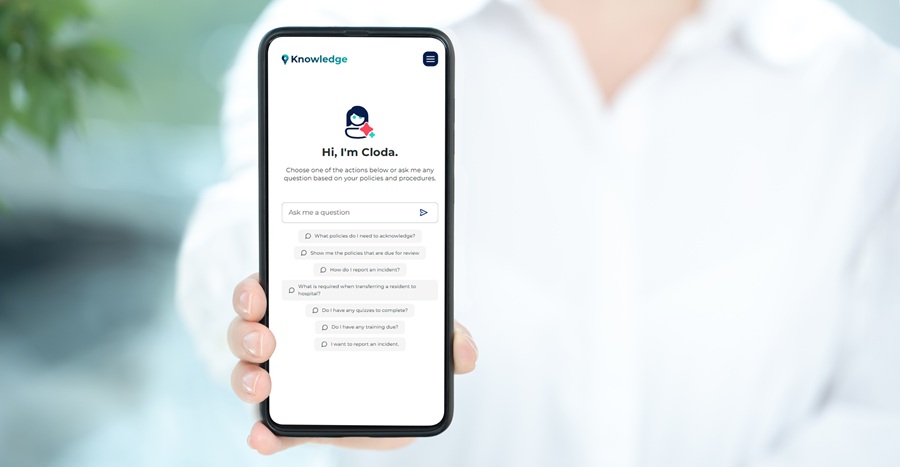
How can Cloda help you prepare for the MHC Standards?
Cloda is an AI-powered Quality Management System developed by HCI that helps centres build and evidence the governance and quality processes the Standards require.
Cloda works as a digital teammate for managers and frontline staff: it keeps policies, audits, risks, incidents and training in one place, and gives staff answers at the point of care.
The table below maps each Cloda module to the standards it supports.
Just Ask Cloda and The Library: Instantly Accessible Policies and Procedures
Standard 1.8 requires a comprehensive set of written policies, covering everything from admission and medication to safeguarding, infection control and financial management. Policies must be reviewed at least every three years, and also after any incident, change in legislation or change in the model of service.
The Library gives you one controlled home for that policy suite and your Statement of Purpose (Standards 1.4.2–1.4.4). Review dates are visible, versions are controlled, and you can see which staff have read and acknowledged each policy.
The Standards expect staff to follow the centre’s policies and work within the regulatory framework. Just Ask Cloda, the AI digital assistant, lets staff ask a question and get an answer drawn from your approved policies and procedures, at any time of day. It helps turn written policy into everyday practice.
The Evaluation Station: audits and quality enhancement plans
Standards 1.2.6 and 1.7.1–1.7.3 require a documented schedule of clinical audit, audits and unannounced site visits by the registered proprietor or a delegate, and “internal quality enhancement plans” to address any deficiencies. Standard 1.7.10 then asks centres to monitor whether improvements actually worked.
The Evaluation Station brings the audit schedule, findings and resulting quality improvement plans (QIPs) together, so you can show the full cycle from finding to fix. Auditors raise QIPs against their findings, and action owners are notified automatically, so nothing gets lost between the audit and the follow-up.
With Cloda Voice Audits, auditors can narrate what they see during a walk-round or site visit. Cloda maps their observations to the audit questions, suggests a compliance rating and drafts QIPs with recommended actions for the auditor to review and confirm. The original audio and transcript are stored against the audit as evidence, which makes Voice Audits well suited to the unannounced visits required by Standard 1.7.1.
Risk Management
The Standards expect centres to identify, manage and learn from risk (Standards 1.4.4, 1.8.2), including premises risks assessed in the context of residents’ mental health needs (4.1.4–4.1.5). Standard 2.6.2 adds a distinctly mental health expectation: risk management that balances residents’ autonomy with their safety. Cloda’s Risk Management module gives you a structured way to identify, monitor and control risks, with clear ownership, target dates and reviews. With helpful AI-powered prompts , Cloda suggests existing controls based on your organisation’s information, helping risk owners make informed decisions, assign actions and support safer care.
The Events Doorway: incidents, complaints and feedback
Themes 1, 2 and 6 all require events to be captured and learned from. That includes feedback, complaints, incidents, near misses and reportable events, safeguarding concerns and concerns raised by staff. Cloda’s soon to launch Events Doorway, will let staff report incidents, complaints and feedback quickly, so events are recorded while details are fresh and can be analysed for trends.
The Training Room: mandatory training and competence
Training runs through almost every theme. Standard 6.3.5 lists core training areas, including first aid and basic life support, human rights-based care, trauma-informed practice, assisted decision-making, cultural competence and safeguarding. Other standards add training on complaints, feedback, de-escalation and modified diets. Cloda’s Training Room helps you assign that training and track completion, so you can quickly show a regulator what training has been done what at any point.
What is the MHC self-assessment tool?
The MHC has published a self-assessment tool alongside the Standards to help centres measure where they stand before regulation begins. It reproduces each standard, adds indicators of good practice, and gives centres space to record evidence, a rating and the actions needed to close any gaps.
The MHC recommends completing an initial full self-assessment within six months of the Standards being published. It should then be repeated every year, and after any significant change to the centre’s model of care, premises or staffing.
Who should complete it?
The tool is primarily for the responsible person, working with the provider’s governance lead, the multidisciplinary team and residents. The MHC recommends a working group rather than one person working alone, as it gives a more reliable picture. Any community residential centre can use it, including centres that are unsure whether they meet the “staffed on a 24-hour basis” definition.
How does the rating work?
Each standard is rated as a whole, on a four-point scale:
- Met: Arrangements are consistently in place and reflected in residents’ experience
- Substantially met: Met in most respects; any gaps are minor and do not affect residents’ safety or rights
- Partially met: Some arrangements are in place, but significant gaps affect residents or need significant change
- Not met: The arrangements needed to meet the standard are not in place
Where the evidence could support either of two ratings, the MHC advises choosing the lower one and recording what is needed to reach the higher one. As the tool puts it, an accurate rating is worth more than a favourable one.
What counts as evidence?
Evidence is anything that shows a standard is met in practice: policies, care plans, audit reports, training records and meeting minutes, but also what staff do, what residents say and what can be seen in the centre. The tool is clear that having a policy does not, on its own, show that a standard is met. The strongest evidence links a record to the practice it describes.
Once complete, the assessment is signed off by the provider, a review date is set, and the actions for improvement are taken forward as an action plan. The tool supports steps 2 and 3 of the MHC and HIQA’s How to Put National Standards into Practice guide: self-appraisal by a working group, then an action plan.
How should centres start preparing for MHC registration?
Start with the MHC’s self-assessment tool, ideally within six months of the Standards’ publication, then build the governance and evidence you will need for registration. A practical sequence:
- Set up governance for the work. Agree who leads the self-assessment, how findings are reported and how management will review them.
- Name your key people. Identify the registered proprietor, registered person and responsible person, and document their responsibilities.
- Form a working group. Include staff from different disciplines, and residents or their supporters.
- Complete the self-assessment. Work through all six themes, record your evidence and where it is held, and rate each standard honestly.
- Turn gaps into an action plan. Give every action an owner and a realistic completion date, and have the assessment signed off by the provider.
- Prioritise the quick wins. Policy gaps (Standard 1.8.2), the Statement of Purpose (1.4.4), the audit schedule and training records (6.3.5) can often be closed quickly.
- Plan premises work early. Bedroom, bathroom and location requirements may need capital investment and long lead times.
- Reassess every year. Repeat the self-assessment annually, and after any significant change to your model of care, premises or staffing.
The MHC and HIQA’s guide, How to Put National Standards into Practice, is a useful companion, and the MHC recommends reading the Standards alongside its National Quality Framework.
Frequently asked questions
- When do community mental health centres need to register with the MHC?
Registration becomes mandatory once the relevant provisions of the Mental Health Act 2026 are commenced by ministerial order. At the time of writing, the Act is awaiting commencement, so no registration date has been set.
- Are the National Standards for Community (Residential) Mental Health Centres legally binding?
No. The MHC states that the Standards are not enforceable in the same way as regulations. However, they will inform the regulations made under the Act and provide the basis for the MHC’s assessment of centres.
- Do the Standards apply to medium- or low-support residences?
No. Medium-support residences, low-support homes, hostels and independent homes are outside the scope of the Standards. Mental health services delivered into those settings are expected to be regulated separately as community mental health services.
- Can a centre use on-call or remote monitoring and still count as “staffed on a 24-hour basis”?
Yes. The MHC interprets the term as continuous staff availability, which can include formal on-call arrangements or technology-enabled remote monitoring alongside physical presence.
- Are restraint and seclusion permitted in community mental health centres?
No. Standard 2.9.3 states that mechanical restraint, physical restraint and solitary confinement are not used in the centre.
- How often must policies be reviewed under the Standards?
At least every three years, and also following any incident, change in legislation or change in the model of service (Standard 1.8.3).
- How often should the MHC self-assessment be completed?
The MHC recommends an initial full self-assessment within six months of the Standards’ publication, then annually, and after any significant change to the centre’s model of care, premises or staffing. Individual themes can be reassessed more often where the action plan provides for it.
- Will community CAMHS be covered by these Standards?
No. These Standards are for community residential centres. The MHC is developing separate National Standards for Child and Adolescent Mental Health Services.
Get ready for MHC registration with Cloda
The MHC National Standards give community mental health centres a clear picture of what good looks like, and an early view of what the regulator will expect. Centres that start building their quality system now will be in a far stronger position when registration opens.
Cloda helps you bring policies, audits, risks, events and training together in one place, so you can show the MHC not just what your policies say, but how your centre lives them every day.
Book a Cloda demo to see how Cloda can support your centre’s preparation for the MHC National Standards for Community Residential Mental Health Centres.
Contact info@cloda.ai or call +353 (0)1 629 2559.
Disclaimer: This article was developed with the assistance of AI tools. All content has been verified using source documents. The content has been reviewed and edited by HCI to ensure accuracy and relevance to the specific context.

Book a Demo (1)
"*" indicates required fields