




What is document control in healthcare?
Document control in healthcare refers to the systematic management, organisation, and tracking of documents within the healthcare organisation.
Healthcare organisations rely on a wide range of documents every day. These include policies, procedures, care protocols, training records, forms, and guidance documents. Each of these must be current, approved, easy to find, and used consistently across teams.
Document control ensures that there is a clear process for how documents are written, reviewed, updated, shared, and retired. It reduces the risk of multiple versions being used at the same time and helps organisations maintain a reliable source of truth for staff.
Why is document control so important in healthcare?
Document control matters in healthcare because staff decisions depend on having quick access to accurate, up-to-date guidance.
In healthcare settings, documentation does more than record information. It guides action. Policies and procedures shape how teams respond to infection prevention issues, medication management, safeguarding concerns, admissions, incident reporting, escalation processes, and many other aspects of care delivery.
When documents are poorly managed, several risks arise. Staff may follow outdated procedures, spend too much time searching for information, or interpret local practice differently across departments or sites. These problems can affect care quality, patient safety, staff confidence, and inspection readiness.
Good document control supports organisations by helping them:
- maintain consistency across teams and locations
- reduce the risk of outdated guidance being used
- improve accountability and oversight
- support staff during training and onboarding
- demonstrate compliance during audits and inspections
For healthcare leaders, this makes document control an essential part of governance rather than a background administrative process.
How does document control support patient safety?
Strong document control supports patient safety by reducing variation, improving access to correct guidance, and helping staff act consistently.
Patient safety depends on reliable systems as much as individual knowledge. Even experienced staff can make errors when the right information is hard to find, buried in lengthy files, or spread across multiple platforms.
When policies and procedures are clearly controlled, staff are more likely to use approved and current guidance in day-to-day practice. This is particularly important in fast-moving care environments where teams need clarity under pressure.
Document control also supports safer communication. When everyone is working from the same approved document set, there is less room for confusion about expectations, responsibilities, or current best practice. That consistency becomes especially important during handovers, training, incidents, and service change.
In this way, document control contributes to a culture where safe practice is easier to follow and easier to verify.
What are the compliance benefits of effective document control?
Effective document control helps healthcare organisations demonstrate oversight, version control, and evidence of compliance.
Healthcare providers operate in highly regulated environments. Policies and procedures need to be current, reviewed at appropriate intervals, and accessible to the staff expected to follow them. Organisations also need to show that governance processes are active rather than assumed.
A robust document control process helps by creating visibility around:
- document ownership
- review dates
- approval status
- version history
- access and distribution
- staff acknowledgement and understanding
Document control helps healthcare organisations to demonstrate their regulatory compliance by tracking staff members acknowledgement of receipt of documents and demonstrating that you have reviewed and updated policies, within the required timeframes. Without clear document control, it becomes difficult to prove that the right guidance was available, current, and communicated appropriately.
For that reason, document control is closely linked to broader compliance and quality assurance systems across healthcare services.
What are the risks of poor document control?
Poor document control increases the risk of outdated information, inconsistent practice, duplicated work, and reduced organisational assurance.
Many healthcare organisations still face challenges with fragmented systems. Important documents may be stored in shared drives, email chains, local folders, paper manuals, or across several platforms. Over time, this creates uncertainty about which version is current and where staff should go for reliable information.
Some of the most common consequences include:
- staff using superseded documents
- delays in finding relevant guidance
- duplicated or conflicting files
- difficulty tracking review deadlines
- limited visibility for managers and governance teams
- inconsistent practice across services or sites
These issues can create operational inefficiency, but in healthcare they also carry wider implications for patient safety and compliance. When systems are unclear, even simple tasks can become more vulnerable to error.
How can digital tools improve document control in healthcare?
Digital tools improve document control by making approved documents easier to manage, easier to access, and easier for staff to use correctly.
A well-designed digital document control system can help centralise policies and procedures, automate review workflows, reduce duplication, and improve oversight. It can also make it easier for staff to access the most relevant information without relying on memory or informal workarounds.
In practical terms, digital systems can support:
- a single source of truth for policies and procedures
- controlled review and approval workflows
- stronger version control
- better accessibility across sites and devices
- easier reporting for audits and governance
- improved communication when documents change
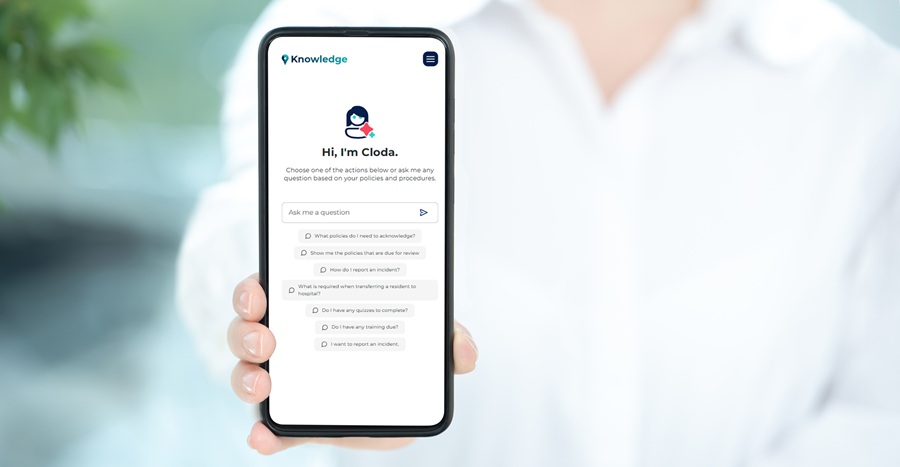
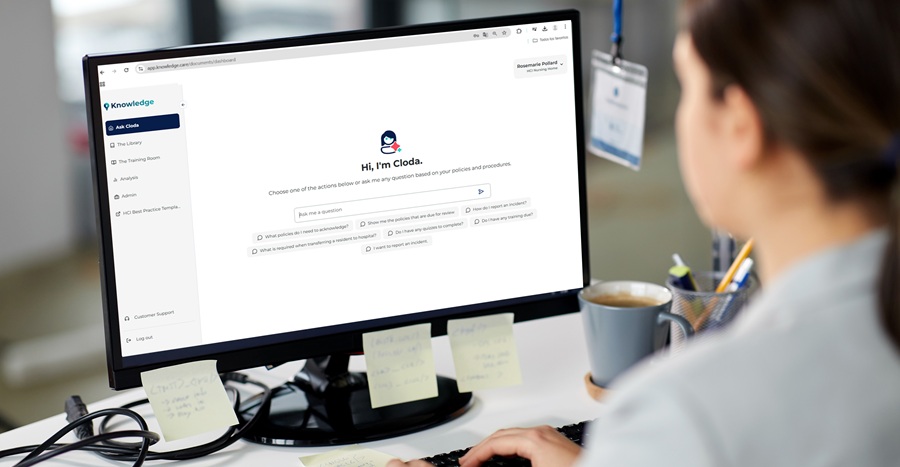
Newer AI enhanced systems such as Cloda, also support staff access and comprehension of procedures in more active ways. For example, rather than simply storing documents, Cloda instantly provides the answers staff need from your procedures, reinforces learning with quizzes, and reduce the friction involved in using policies during busy shifts.
Where does Cloda fit into modern document control?
Cloda supports modern document control by helping staff access and understand approved policies and procedures more quickly in day-to-day practice.
Cloda does not replace the fundamentals of document control. Healthcare organisations still need clear governance, ownership, review processes, and approved source documents. In addition to these features, Cloda adds a more accessible way for staff to engage with that approved content.
In environments where frontline teams are short on time, working across multiple locations, or speaking different first languages, access and comprehension become just as important as storage. Cloda helps bridge that gap by making policies and procedures easier to reach and easier to use in practice.
This makes it relevant not only to compliance teams, but also to quality leaders, operational managers, and service providers looking to improve how guidance is applied at the point of care.
Lynn Healy, Quality & Risk Officer at St. Michael’s Hospital shared her feedback on Cloda…“Cloda is incredibly user-friendly. Being able to ask Cloda any question on our procedures and for her to instantly provide the right answer is going to be really helpful for our staff. Cloda is a really positive change for St Michael’s Hospital and a fantastic improvement that helps ensure patient safety.”
What are the key steps in an effective document control process?
An effective document control process includes clear ownership, regular review, version control, staff access, and ongoing monitoring.
A strong document control process is not just about where documents are stored. It depends on having clear governance around how documents are created, approved, updated, communicated, and retired. In healthcare, this helps ensure that policies and procedures remain accurate, accessible, and usable in practice.
The most effective document control processes usually include the following steps:
- Assign clear document ownership
Each policy or procedure should have a named owner who is responsible for keeping it accurate and up to date. This makes accountability clearer and reduces the risk of documents being overlooked.
- Utilise Document Classification Codes
Categorise documents based on their area of service, for example GM (Governance & Management), RR (Resident Rights), PR (Protection), QL (Quality of Life), HR (Staffing), IM (Information Management). Utilise a sequential numbering allocation to maintain a master documentation log eg. GM-001.
- Use a standard approval process
Documents should go through a formal review and approval workflow before publication. This helps ensure that content is clinically appropriate, aligned with organisational policy, and signed off by the right people.
- Maintain version control
Implement a robust revision control system to avoid confusion and errors resulting from outdated documents. Clearly label documents with revision numbers and dates and ensure that only the latest version is in use. Maintain a log detailing the date of release of updated revision for implementation.
- Access Controls
Define and implement access controls based on roles and responsibilities. Only authorised personnel should have access to make changes or carry out actions to documents. Regularly review and update access permissions to reflect changes in staff roles and responsibilities.
- Set regular review dates
Regularly review and update documents, especially those related to policies and procedures. At a minimum, documents must be reviewed every three years, but as healthcare is an evolving sector, documents should be reviewed and updated, when necessary, in accordance with the latest industry standards and best practices.
- Audit Trails
If using a document management system, enable audit trails to record who made changes and when they were made. Audit trails are valuable for tracking document history and ensuring compliance.
- Make documents easy to access
Even well-written policies are of limited value if staff cannot find them when needed. Documents should be stored in a user-friendly, centralized digital system such as Cloda and The Library to support fast retrieval across teams, sites, and devices.
- Communicate updates clearly
When a document changes, staff should be notified in a structured way. This is especially important when changes affect care processes, compliance requirements, or patient safety procedures.
- Track acknowledgement and understanding
It is not enough to assume that staff have read updated documents. Good document control includes ways to confirm acknowledgement and, where possible, support understanding through training or quizzes.
- Archive outdated documents properly
Superseded documents should be removed from active use but retained appropriately for audit and governance purposes. This reduces confusion while preserving a clear historical record.
- Monitor compliance and usage
Conduct regular internal audits to ensure compliance with document control policies. Address any non-conformance issues promptly and use audit results to improve your document control processes.
- Support continuous improvement
Document control should evolve over time. Feedback from staff, incident reviews, inspections, and quality improvement work can all help strengthen how documents are managed and used in practice.
Conclusion
Document control in healthcare is essential because safe, compliant care depends on reliable access to current and approved guidance.
As healthcare services become more complex, document control has a growing influence on patient safety, compliance, staff confidence, and operational consistency. Organisations can no longer rely on fragmented folders, paper manuals, or passive storage systems alone.
The core principle remains simple: the right people need the right information at the right time. Strong document control helps make that possible. Digital tools such as Cloda can strengthen that process further by making approved guidance more accessible and usable in day-to-day care, while keeping the focus where it belongs: on safer, more consistent service delivery.
For more information or a demo of Cloda, contact info@cloda.ai or call 01 629 2559.

Key takeaways
- Document control is a core healthcare governance function, not just an administrative task.
- It helps ensure staff are using current, approved policies and procedures.
- Strong document control supports patient safety, consistency, and compliance.
- Poor document control increases the risk of outdated guidance, confusion, and inefficiency.
- Effective document control depends on clear ownership, review cycles, version control, and communication.
- Digital tools can improve both governance oversight and frontline access to information.
- Cloda supports modern document control by helping staff find and use approved guidance more easily.
Frequently asked questions
What is document control in healthcare?
Document control in healthcare is the process of managing policies, procedures, and protocols so they remain current, approved, accessible, and traceable throughout their lifecycle.
Why is document control important in healthcare?
It is important because healthcare staff depend on accurate and up-to-date guidance to deliver safe, consistent, and compliant care. Poor document control can lead to confusion, variation in practice, and increased operational risk.
What are the main risks of poor document control?
The main risks include outdated documents being used, inconsistent practice across teams, weak audit trails, and delays in finding important information when needed.
How can digital systems improve document control?
Digital systems can improve document control by centralising documents, strengthening version control, automating review workflows, and helping staff access relevant guidance more quickly.
What makes an effective document control process?
An effective process includes clear ownership, formal approval, regular review, version control, accessible storage, communication of updates, and ongoing monitoring to ensure documents are current and being used correctly.

Book a Demo (1)
"*" indicates required fields