


Rosemarie Pollard

Care Home Audit Software: How It Meets CQC’s Regulation 17 Requirements

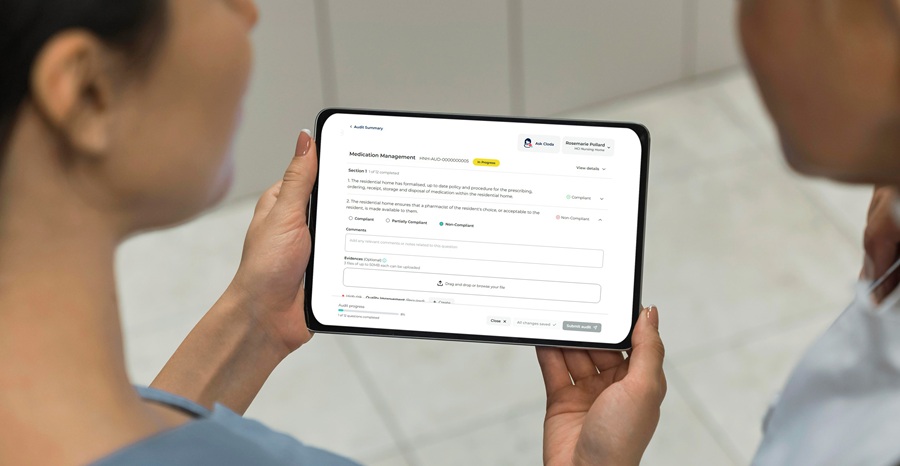
Regulation 17 requires care homes to run audit systems that catch risk, escalate it, and drive verified action โ€” not just complete a checklist. This piece breaks down what CQC actually requires, why manual audits and spreadsheets keep falling short in recent inspection reports, and what features care home audit software needs to close that gap, from evidence-linked scoring to closed-loop corrective actions.

Care Home Audit Software: How It Meets CQC’s Regulation 17 Requirements Read More ยป

Care Home Governance: What Recent CQC Inspection Reports Reveal About Audit Failures

A review of CQC care home assessment reports rated Requires Improvement or Inadequate found every single one had deficits in audit and quality assurance systems. Recurring failures included audits missing real risks, compliance scores not matching reality, findings without follow-through, and unclear ownership. This article breaks down the patterns by theme and outlines how closed-loop audit tools like Evaluation Station address the gap.

Care Home Governance: What Recent CQC Inspection Reports Reveal About Audit Failures Read More ยป

Internal Audit vs Regulatory Inspection: Why Your Internal Audit Software Matters for CQC Readiness

Internal audits and CQC inspections are meant to reach the same conclusion, but often don’t โ€” audits report compliance in areas inspectors later find otherwise. This blog explains why the two drift apart: findings identified but never tracked to a completed action. It outlines what strong internal audit software must do โ€” structured scheduling, evidence capture, and closed-loop tracking โ€” to keep audit records and operational reality aligned.

Internal Audit vs Regulatory Inspection: Why Your Internal Audit Software Matters for CQC Readiness Read More ยป

CQC Begins Pilot of New Assessment Framework as Sector-Specific Model Moves Closer

CQC has begun piloting its new sector-specific assessment approach, with testing running from June to October 2026 and final evaluation planned for November. Providers should use this period to strengthen policy access, staff understanding and governance evidence. Cloda supports everyday inspection readiness by giving staff instant answers from approved policies and helping leaders identify engagement and knowledge gaps.

CQC Begins Pilot of New Assessment Framework as Sector-Specific Model Moves Closer Read More ยป

What Recent CQC Homecare Findings Reveal About Quality, Safety and Governance

Recent CQC inspection reports for homecare providers reveal recurring high-risk themes behind ratings of Requires improvement. Across Safe, Effective, Caring, Responsive and Well-led, the same issues appear repeatedly: weak governance, poor-quality care planning, inconsistent risk management, medicines safety concerns, gaps in consent and MCA practice, limited learning from incidents, and a persistent gap between policy and daily care. These findings suggest that systemic weaknesses, not isolated mistakes, are driving poorer outcomes.

What Recent CQC Homecare Findings Reveal About Quality, Safety and Governance Read More ยป

The Compliance Gap: Policies Exist, But Practice Does Not Always Follow

Recent CQC inspection reports show that many care providers do not fail because they lack policies, but because policies are not consistently understood or followed in practice. Across disability care homes, the gap between written procedure and frontline delivery contributed to risks in safeguarding, medicines, consent, staffing and governance. Closing that gap requires better access, understanding and application at the point of care.

The Compliance Gap: Policies Exist, But Practice Does Not Always Follow Read More ยป

The high-risk themes emerging in CQC inspection reports for disability care homes

Recent CQC inspection reports for disability care homes reveal recurring high-risk themes behind non-compliance. Across Safe, Effective, Caring, Responsive and Well-led, the same issues appear repeatedly: weak governance, poor-quality care planning, inconsistent staff practice, limited learning from incidents, weak safeguarding, and a gap between policy and daily care. These findings suggest that systemic failures, not isolated mistakes, are driving poorer outcomes.

The high-risk themes emerging in CQC inspection reports for disability care homes Read More ยป

Scroll to Top